Timber Town Review
Advert: this game was gifted by Alley Cat Games, this has not affected our opinion.
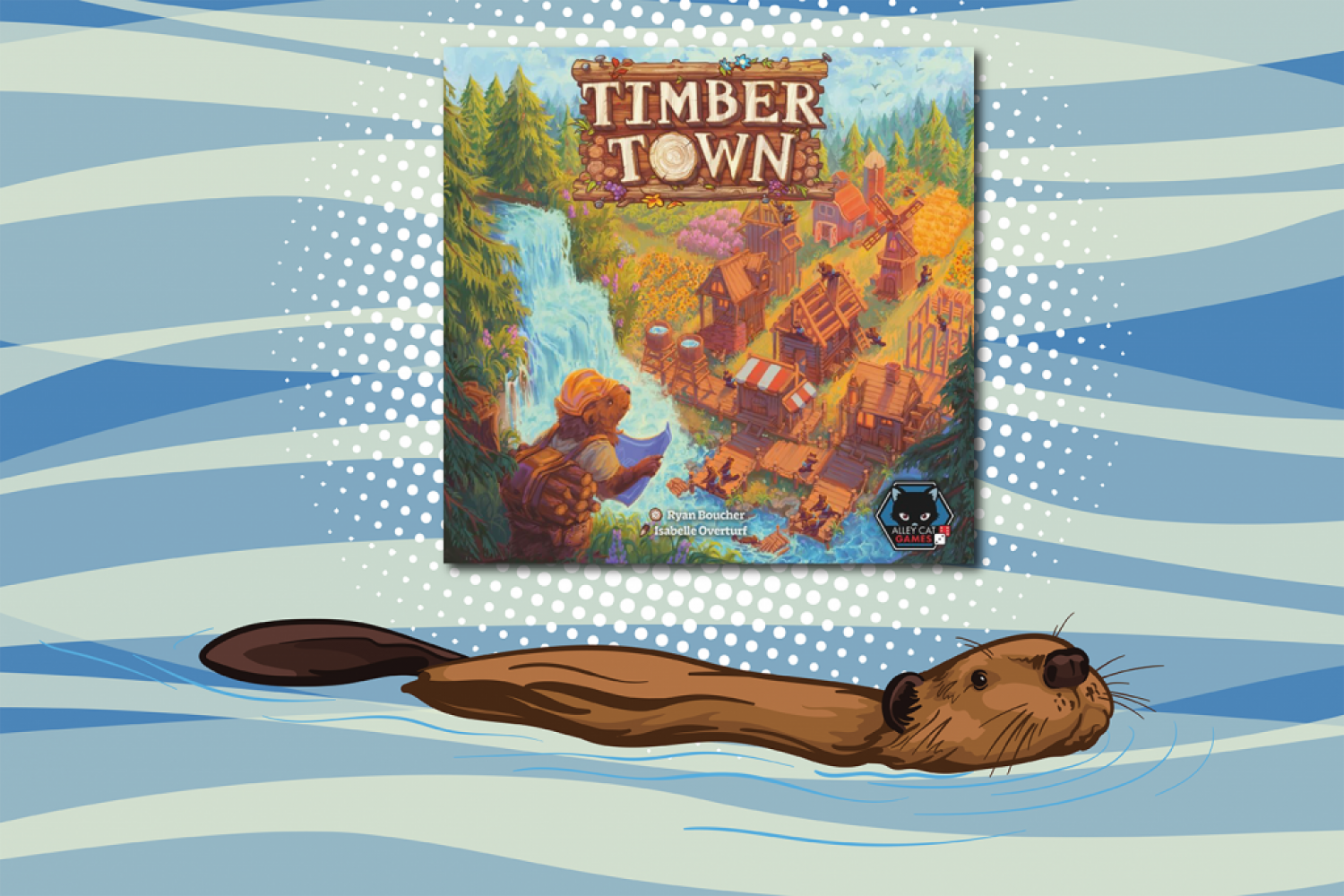
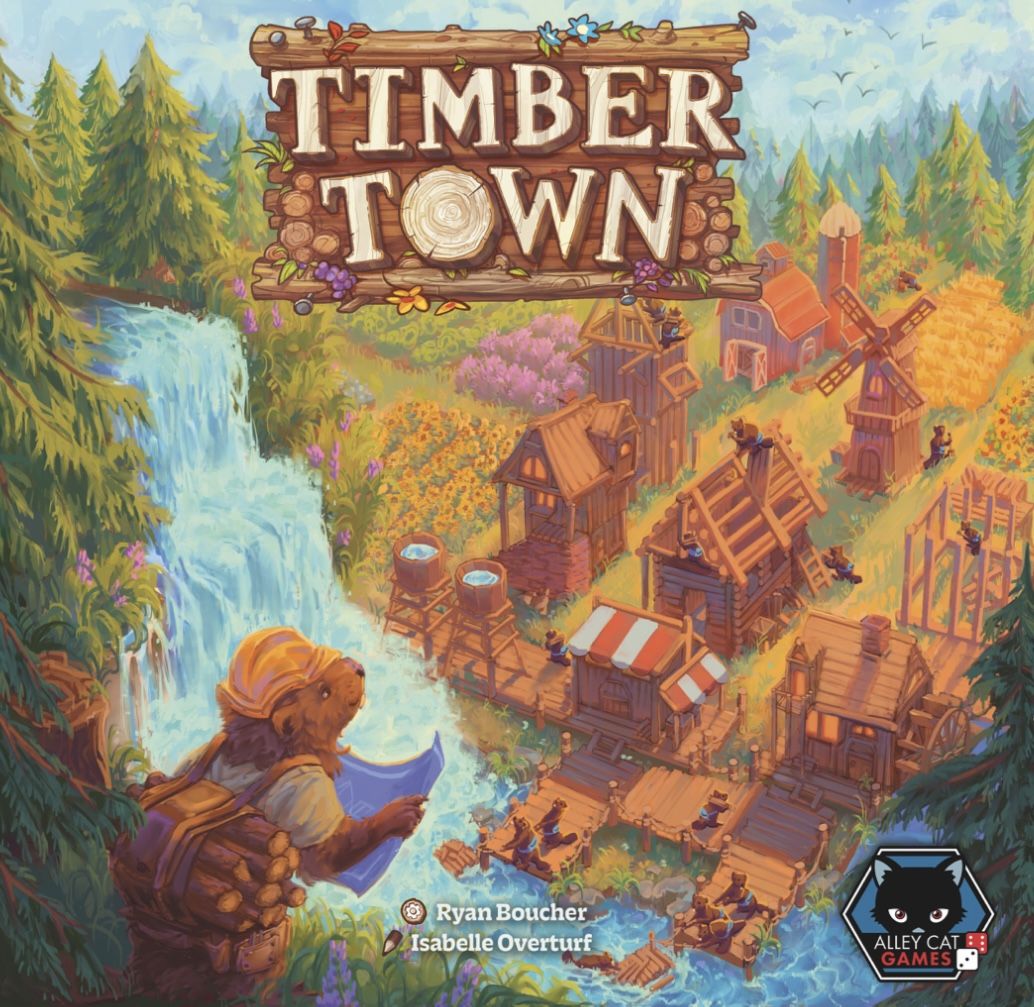
Pitbull sang “It’s going down, I’m yelling timber” and those are the lyrics playing in my head as I lift the lid off Timber Town. You’ll then probably yell, look at that beaver! Because there are little wooden beaver components included. Let’s move swiftly on to the board game review…
©boardgamereview.co.uk
Setup
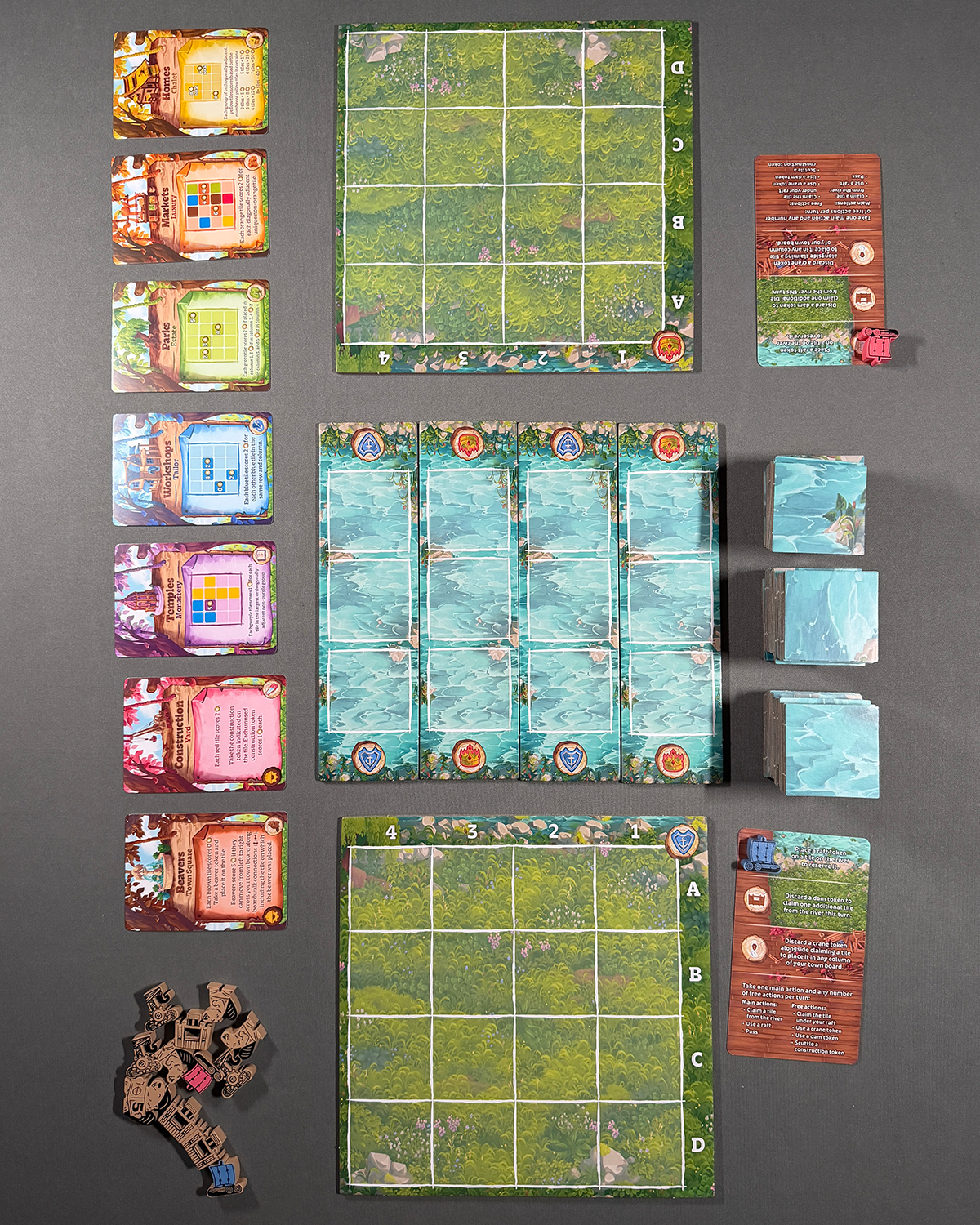
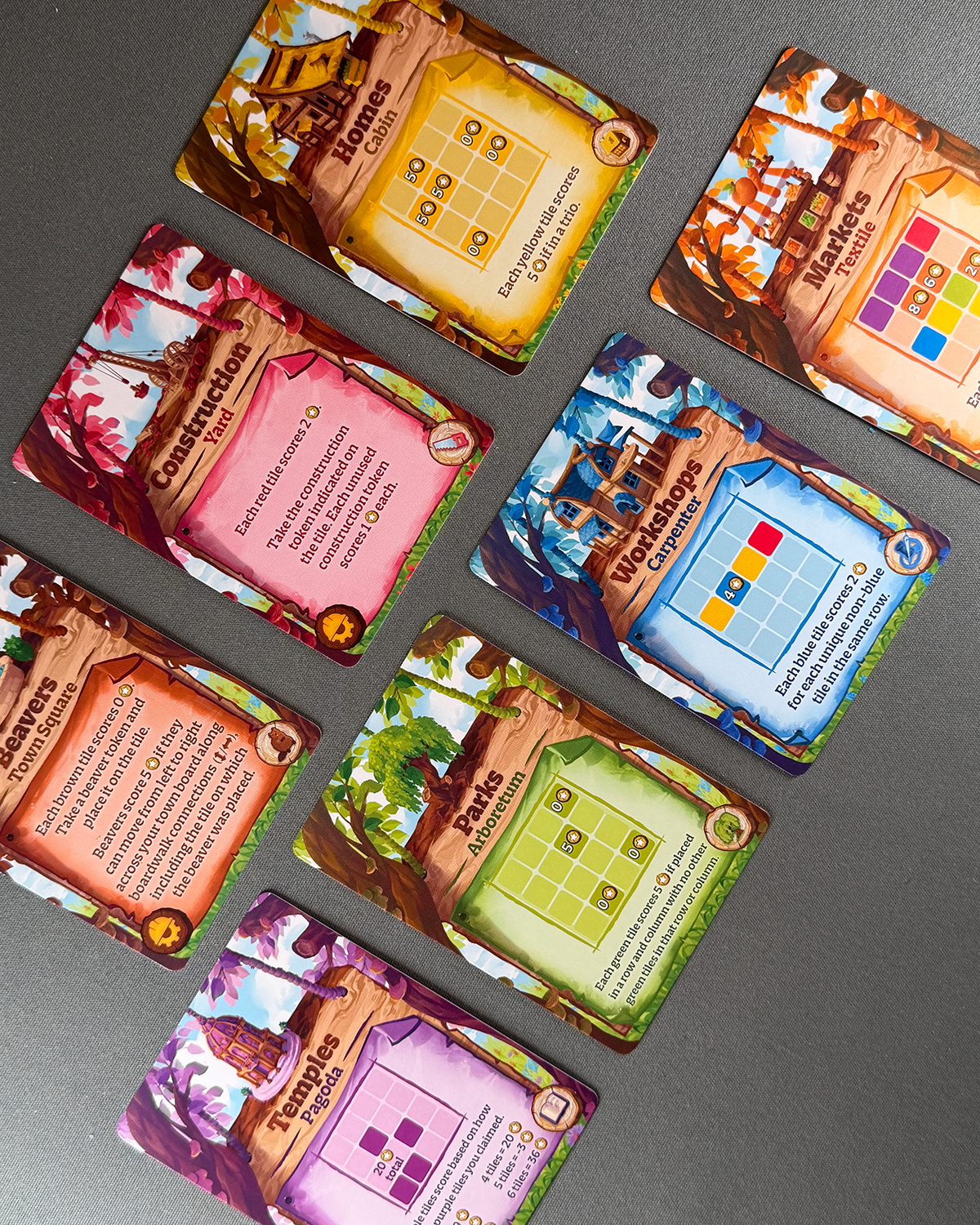
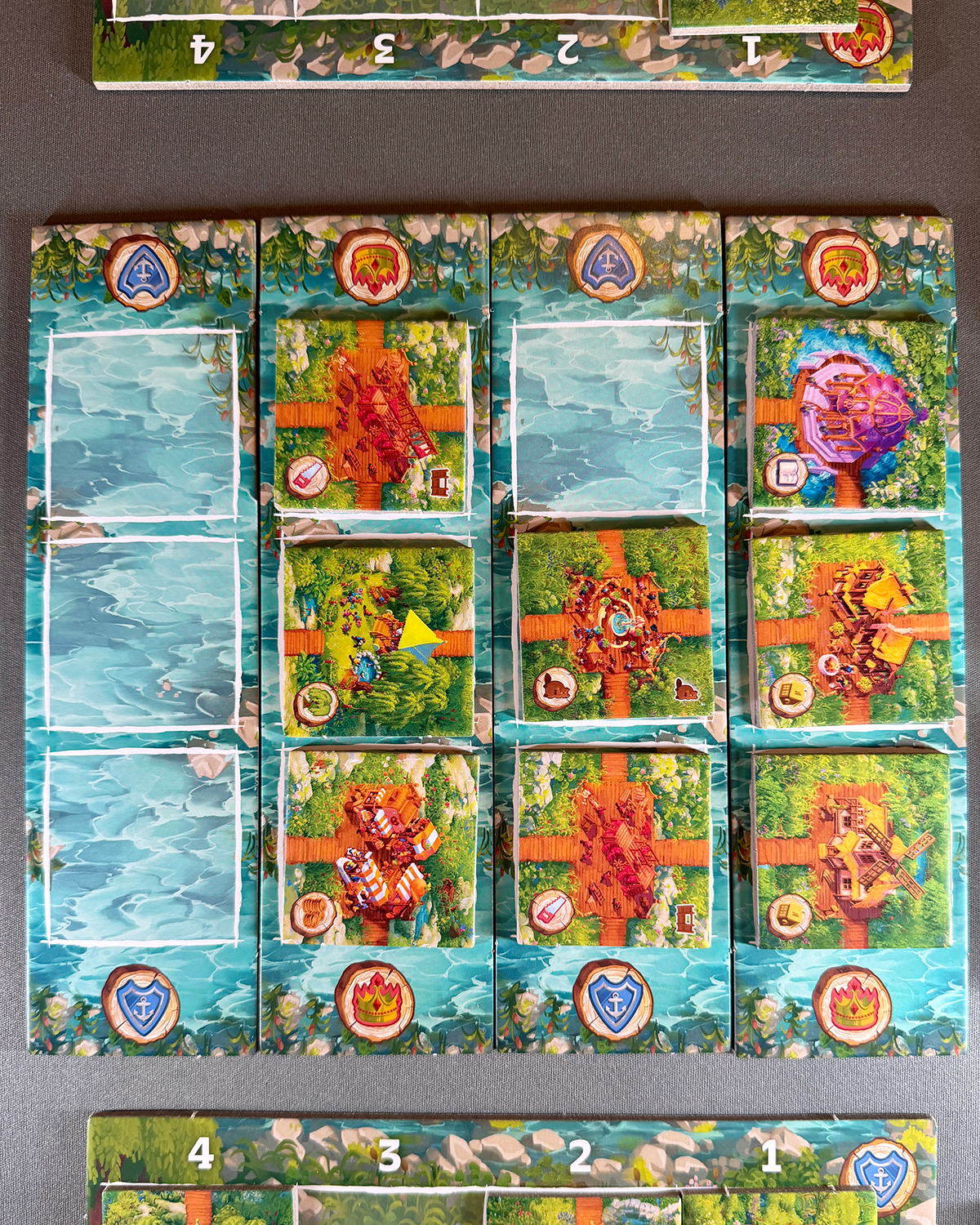
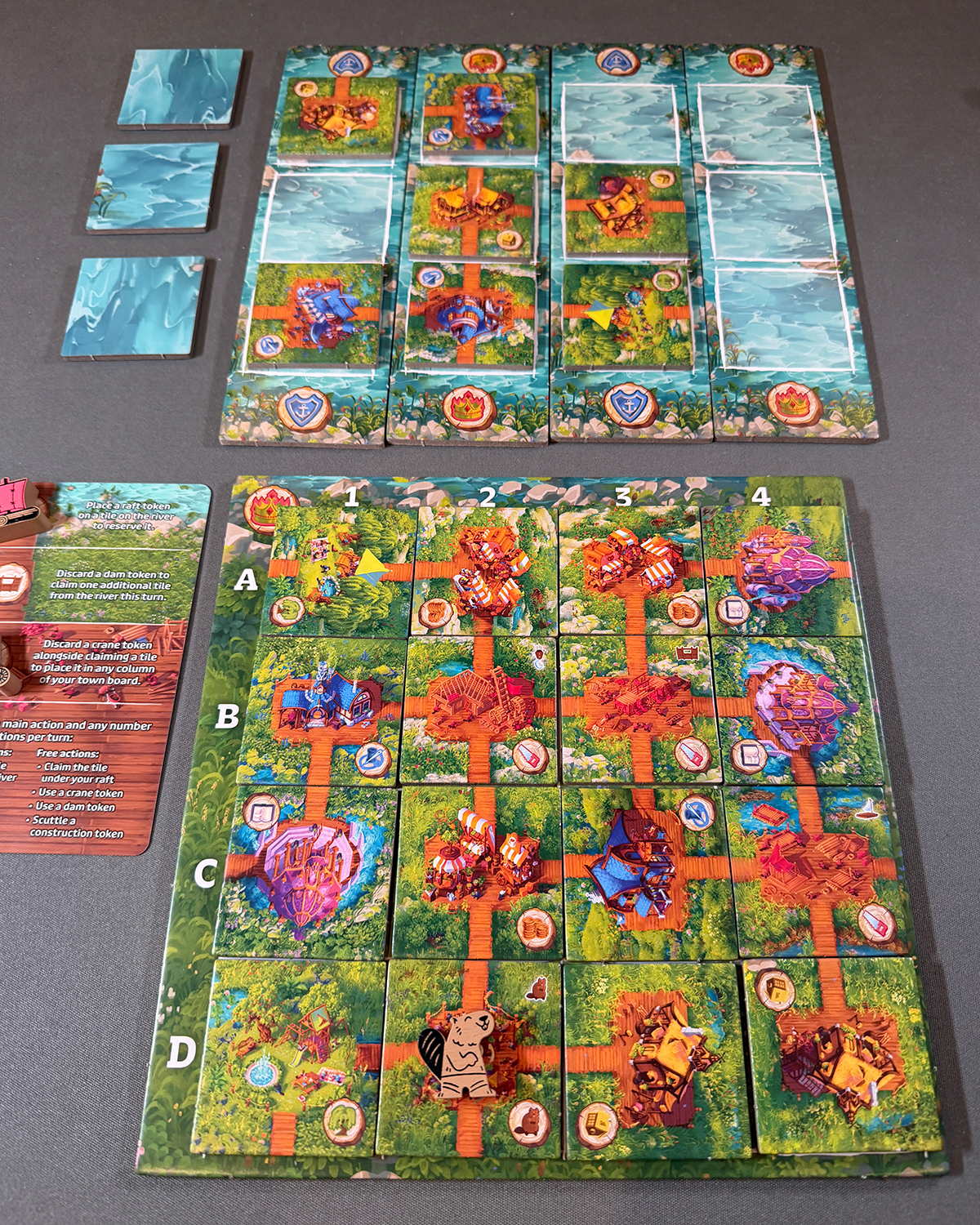
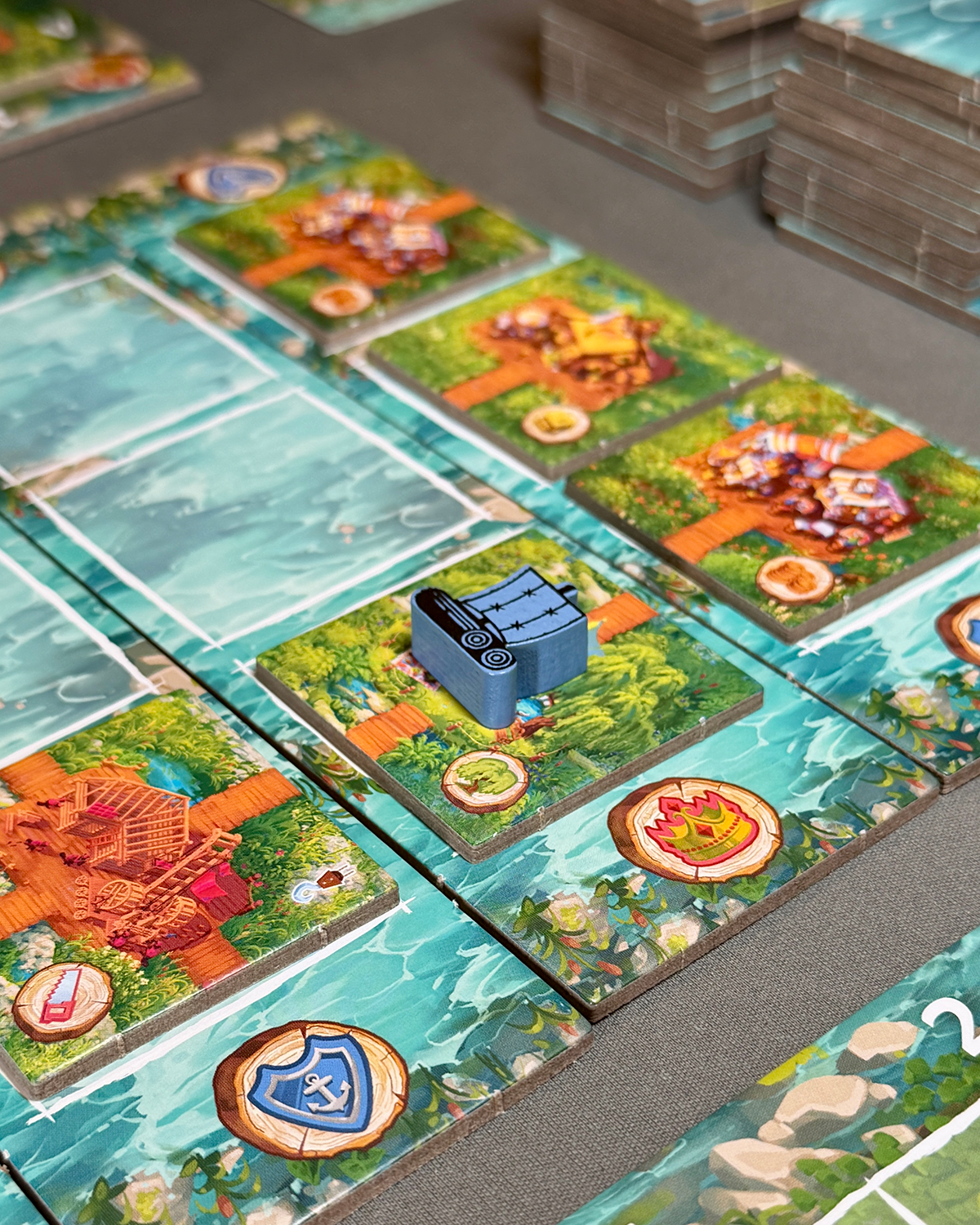
The two players need to sit opposite each other with their player boards in front of them. Betwixt these, a river is formed with alternating player shields. The tiles are then shuffled and stacked in three face down piles. Three of these tiles are placed on the first three river spaces. Give each player a player aid which doubles as component storage, a raft in your colour can be placed here immediately. Form a supply of components nearby. Finally decide on a suite of scoring objective cards for each building. That’s it, even an eager beaver won’t be disheartened by the time it took up!
©boardgamereview.co.uk
Gameplay
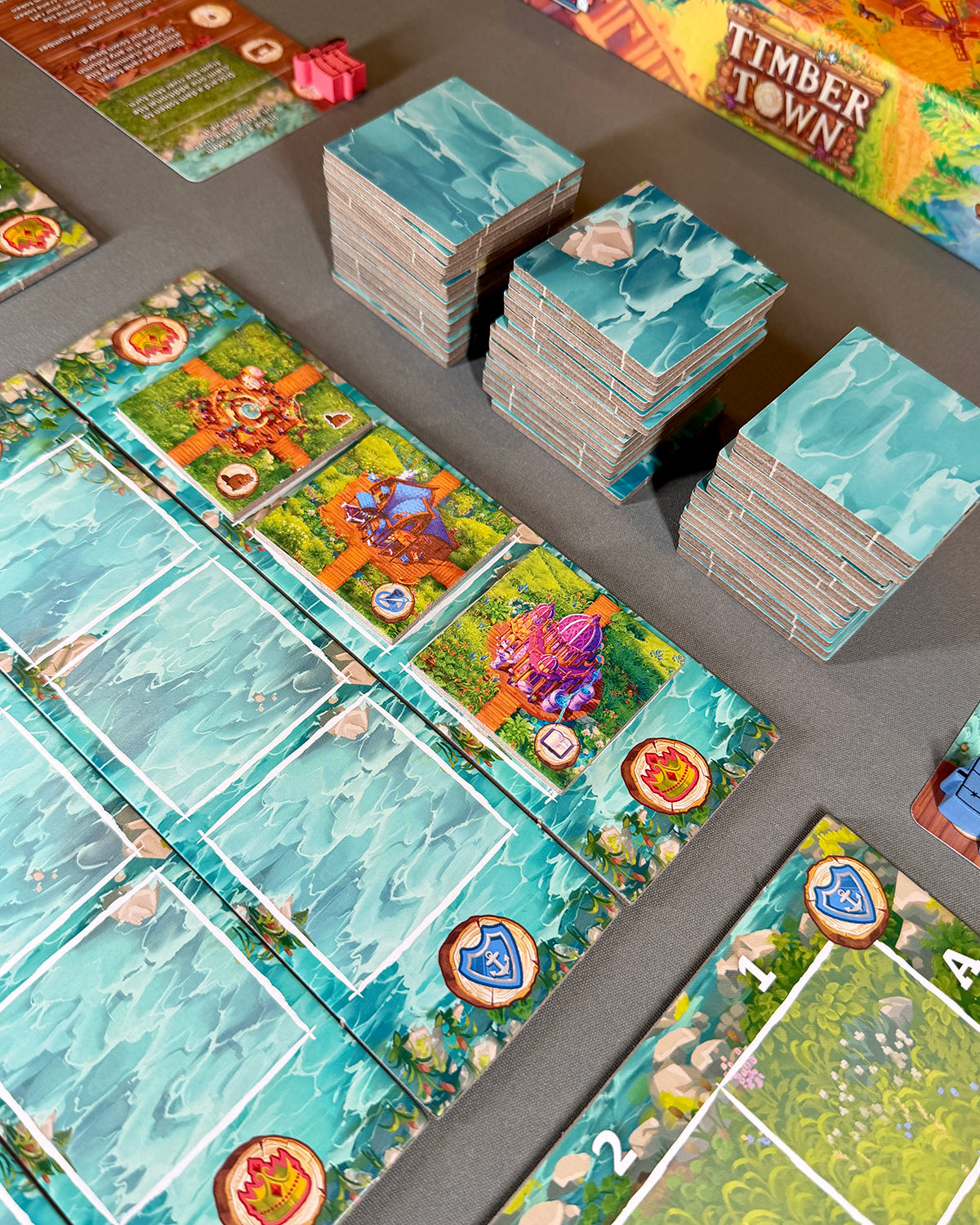
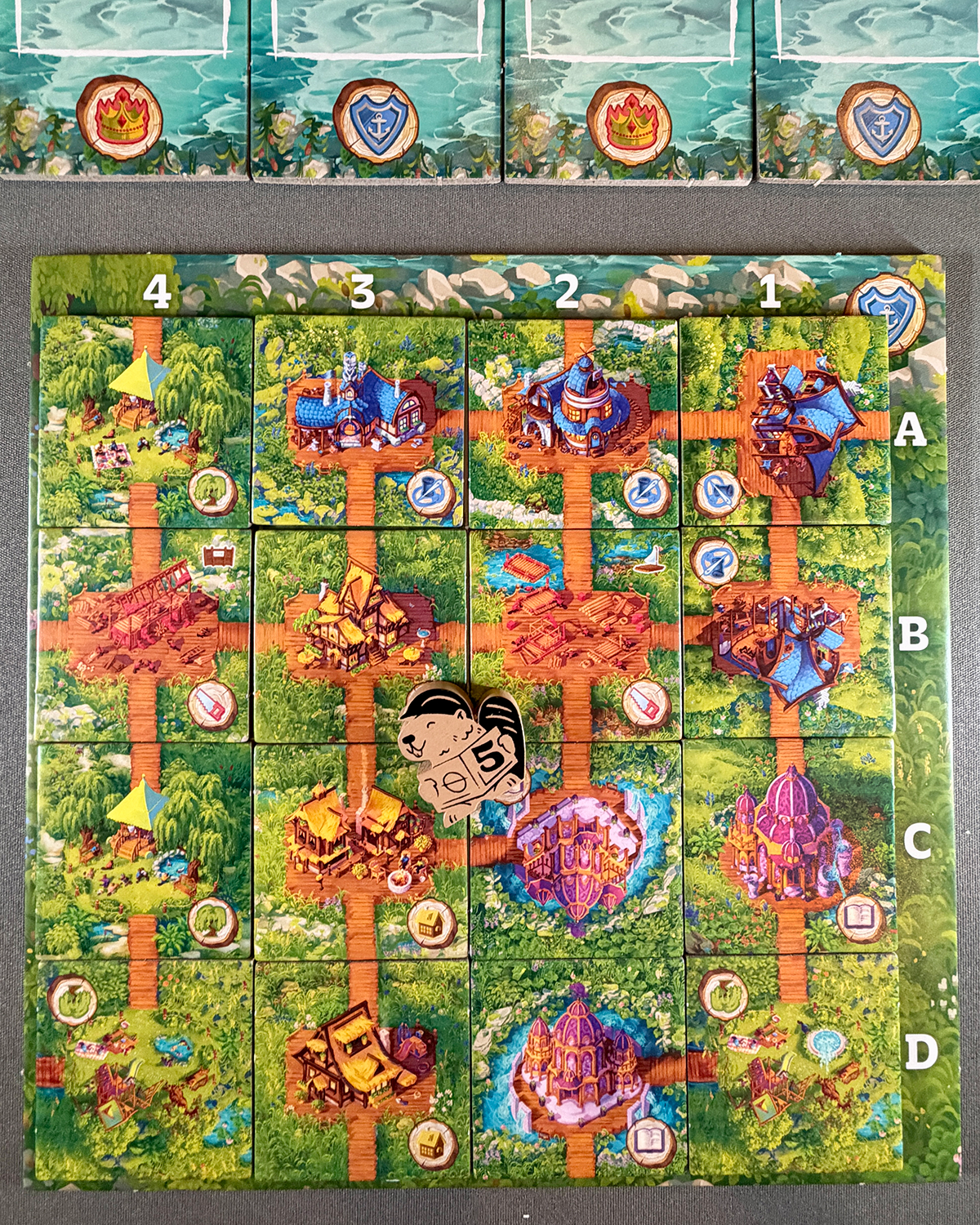
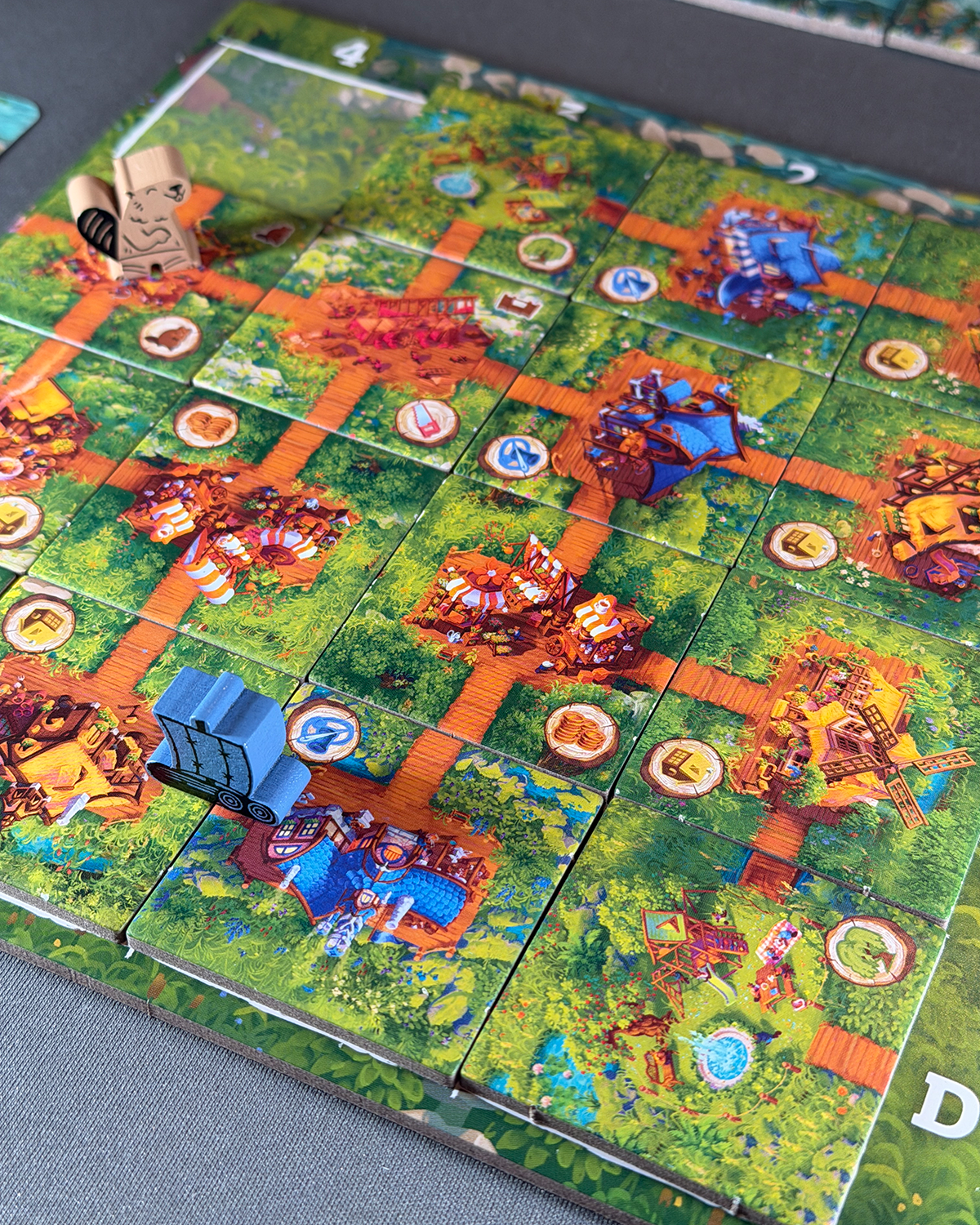
The river tiles in the middle of the table dictate who is the player to take the first action. Players take one main action, which is either to take a tile from the river, or place a raft on a tile, thus reserving it for later. Or, a player always has the option to pass. When taking a tile from the river it has to be placed in the matching column on the player’s town board. Paths (or boardwalks as they are called in this board game) have to line up with one another so there can be no dead ends.
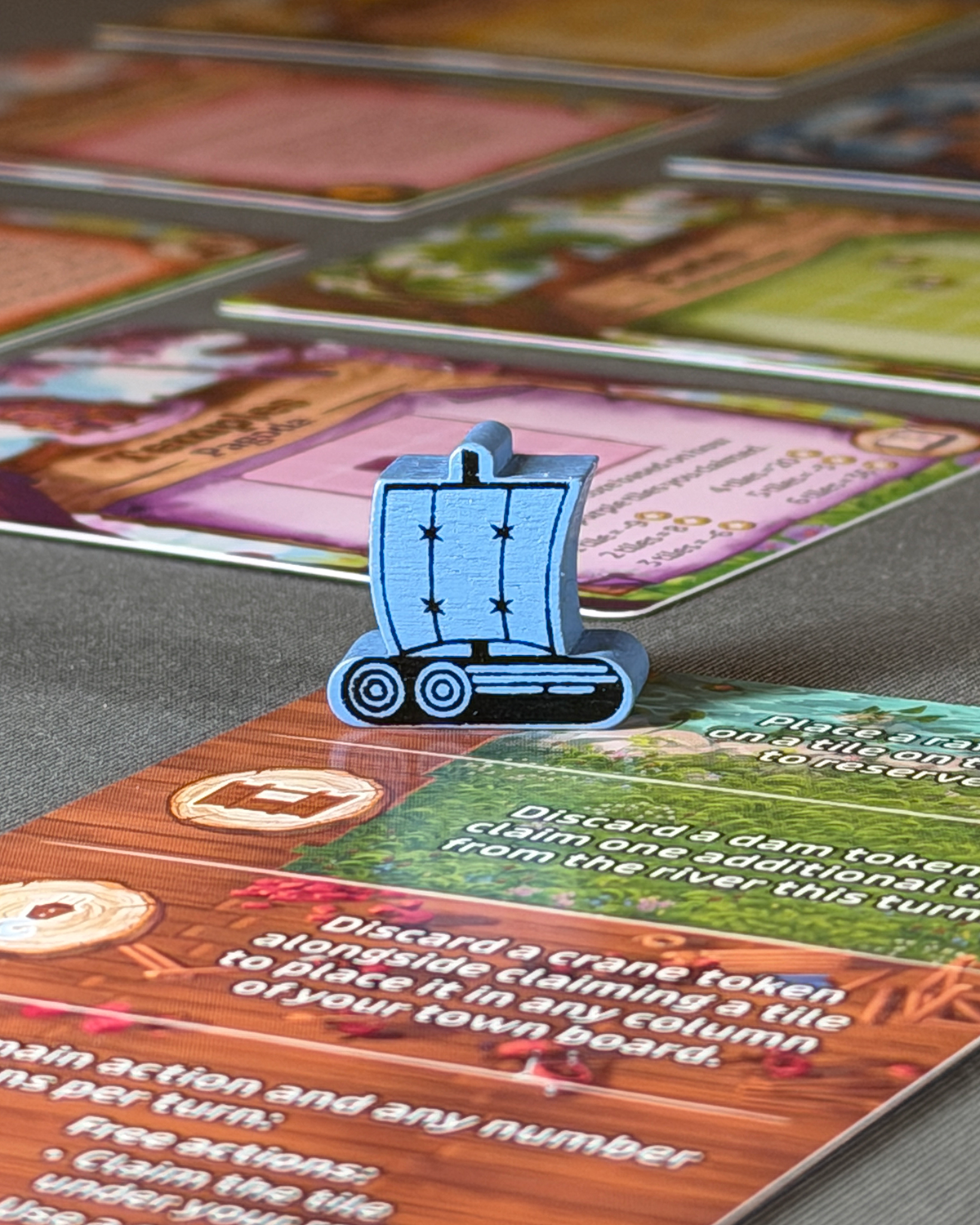
After taking their main first action, players can then optionally chose to play any number of free actions. This includes claiming the tile beneath their raft, or using one of the other tokens available in the game. The crane allows you to disregard the column placement rule whereas the dam slows down the river allowing you to take two tiles from the river.
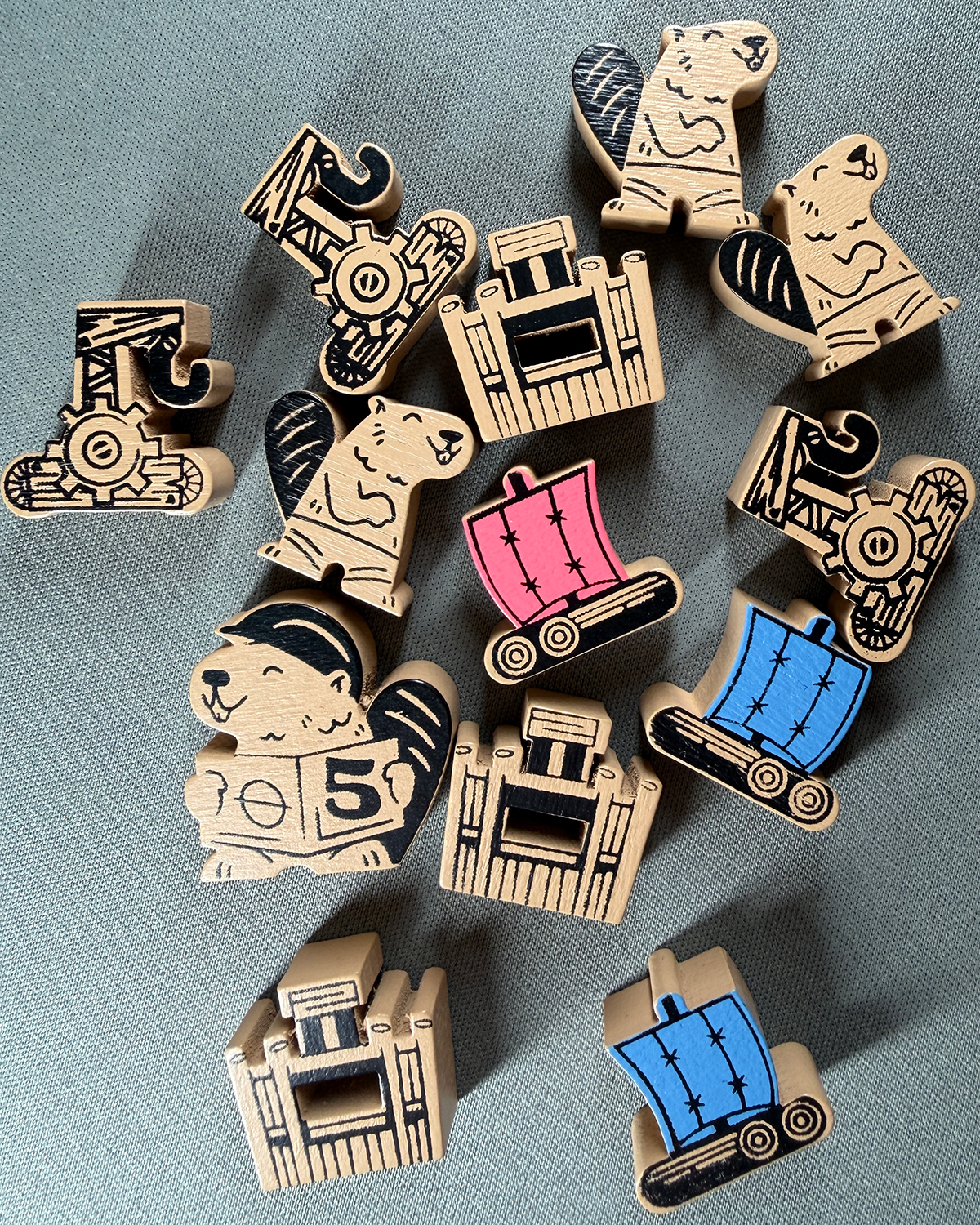
You can also scuttle a raft, crane or dam to form a pathway between two tiles, useful if you would otherwise have a dead end and not be able to place the tile, or if you want to create a route from the left to right of the board.
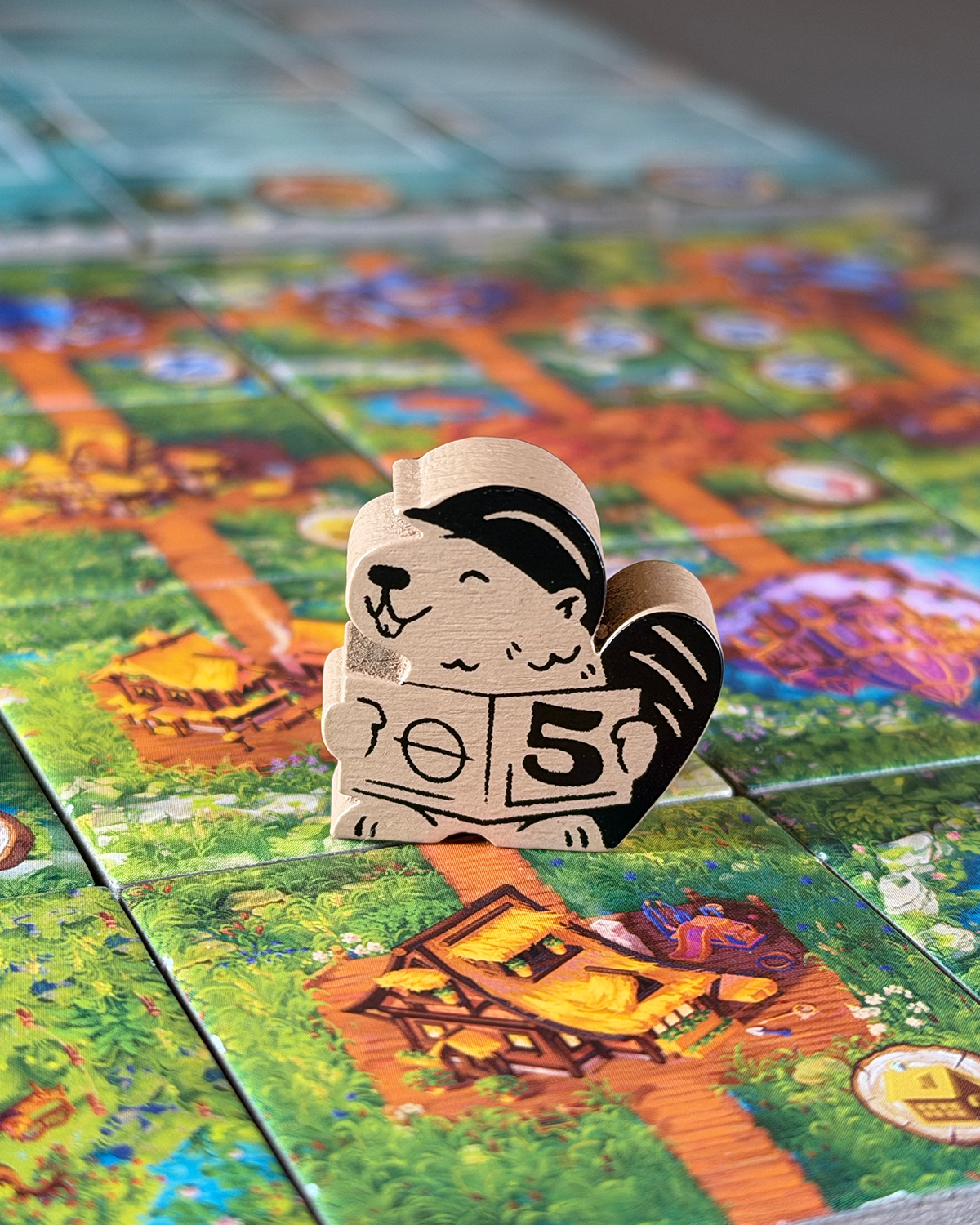
The only reason you need to get your tiles to link from the left edge to the right is if you choose a tile with a beaver on it, these will give you five points if they have access to the edges of your board.
Once both players have taken their actions, the last river section moves to become the first, discarding any tiles on it, and then three new tiles are placed on it, with the first action taker alternating.
This continues until both players have filled up their board, the first to do so gaining the big ol’ beaver worth five points, or if the tiles stack is empty and no more tiles remain on the river.
Tiles are then scored according to the objective cards chosen at the beginning of the game.
©boardgamereview.co.uk
What it’s like
Onboarding is fairly straightforward, although before each game it is wise to go through the scoring cards that have been selected as they differ. Otherwise, it’s fairly quick to pick up.
There is only one Purple Temple scoring objective that creates the smallest amount of player interaction. You need to have more than your opponent for six bonus points. Otherwise they may snaffle the ideal tile from under your nose, but that’s the extent of interaction. Generally there is always a few options that you can turn into some sort of scoring opportunity, apart from towards the end of some games. Most of the time, you are puzzling away in your own town, doing your own thing. Most tiles are giving you points, so it is just optimising each tiles as much as possible. Games tend to be close in points because of this.
I’m really enjoying playing this with the kids as it is nice and accessible and they can be competitive. It might be a bit lighter than my personal taste, so if I was only able to play it with another adult it may not earn its space on the shelf quite so well. Although as a quick after dinner game, or a quick board game after a long day at work, it is a good option and well worth considering.
The different scoring objectives mixes things up and stops each game being the same, but I think if this one was played too much back-to-back, then it could feel a little repetitive.
©boardgamereview.co.uk
Table Presence
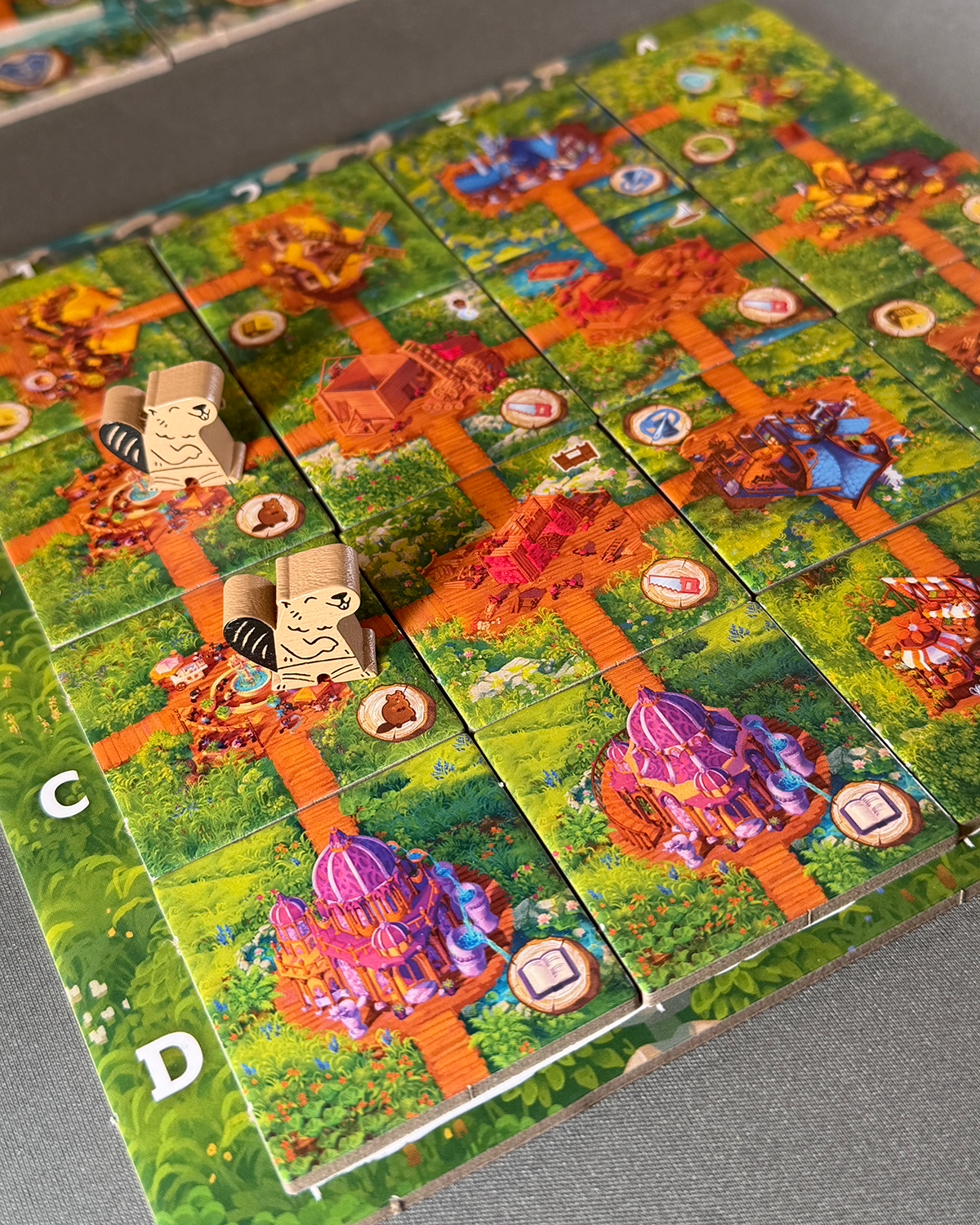
Beavers are quite endearing and so seeing them occasionally adorn your board is a treat. All the wooden components have a charm, but I find scuttling them, although necessary sometimes, feels like a waste as they don’t look so good on your board like that.
The tiles are all nicely illustrated and have clear icons to help identify which is which colour and type. Equally the scoring cards that accompany these are clear and give good examples of how they score to make things very user friendly. Speaking of scoring, I’m a big fan of the scoresheets included that step you through the point tallying nicely.
The rulebook isn’t excellent, but equally it seems to cover everything you need. I think the layout and order could’ve been improved though.
The only thing I would’ve liked that isn’t included would be a bag to hold and store all the tiles in, which could’ve been the draw bag for the river. If this was decorated with adorable beavers all over it then that could have been an epic addition and also made a quick set up and tear down even easier.
©boardgamereview.co.uk
Final thoughts on Timber Town
I’m not too sure why or when nice became a gauche adjective. However, in its true and original meaning, Timber Town is a nice game. It looks good, it plays smoothly and is a very pleasant gaming experience. Which weirdly probably leaves you thinking it’s not very good. But don’t let the lack of superlatives put you off!
Timber Town canters along nicely and doesn’t outstay its welcome. It won’t make the brain work too hard, but isn’t devoid of thinking. Because of that, it is a board game you can play happily with the kids.
There is a lot to like, and while it may not be revolutionary, I can see us playing this a lot when it is just me and one other child at home that wants to play a board game.
©boardgamereview.co.uk
Key Facts
Number of players: 2
Board Game Review Recommended Age: 10+
Publisher’s Recommended Age: 10+
Playing Time: 40 minutes
Setting Up and Take Down Time: 2 minutes
Designers: Ryan Boucher
Publisher: Alley Cat Games
RRP: £24.99
Summary
Timber Town doesn’t offer anything particularly new and exciting, but what it delivers is a fun two player tile-laying puzzle, that will be enjoyed by those who play it.
-
Artwork and Components
-
Complexity
-
Instructions
-
Interaction
-
Value for Money
Overall
Pros
- Puzzley gameplay
- Two player game
- Cute beavers
- Good option with an older child
Cons
- Little interaction
- Most tiles score points
- Could become repetitive
- No draw bag for tiles
Need more games?
If you already own Timber Town and enjoy it, or are looking for other inspiration, you might also like these similar games:
Buy Timber Town
If you want to buy Timber Town after reading our review click on one of our affiliate links below (note there has been no affiliate links until this point)
Reviewer’s Note
For clarity: we don’t get paid for our reviews. However, we were kindly gifted this game by DV Games. We have tried not to let this affect our review in any way.
We may however earn a tincy wincy commission if you buy a game having clicked one of our affiliate links like the one above… this hopefully gives us a bit of pocket money towards hosting costs and new games to review!
As an Amazon Associate I earn from qualifying purchases.
We also are an affiliate of Board Game Prices, a price comparison website for Board Games.
These affiliate advertising programs are designed to provide a means for sites to earn advertising fees by advertising and linking to their websites.