
Space Lab Review
Advert: this game was gifted by Hachette Board Games UK, this has not affected our opinion.
Those that regularly read my reviews will know I really enjoyed Faraway. So you can imagine it took me no time whatsoever to say yes please to Space Lab when I heard the same design team were behind it. You could say I gravitated towards it! Space puns aside, let’s launch into the review!
©boardgamereview.co.uk
Setup
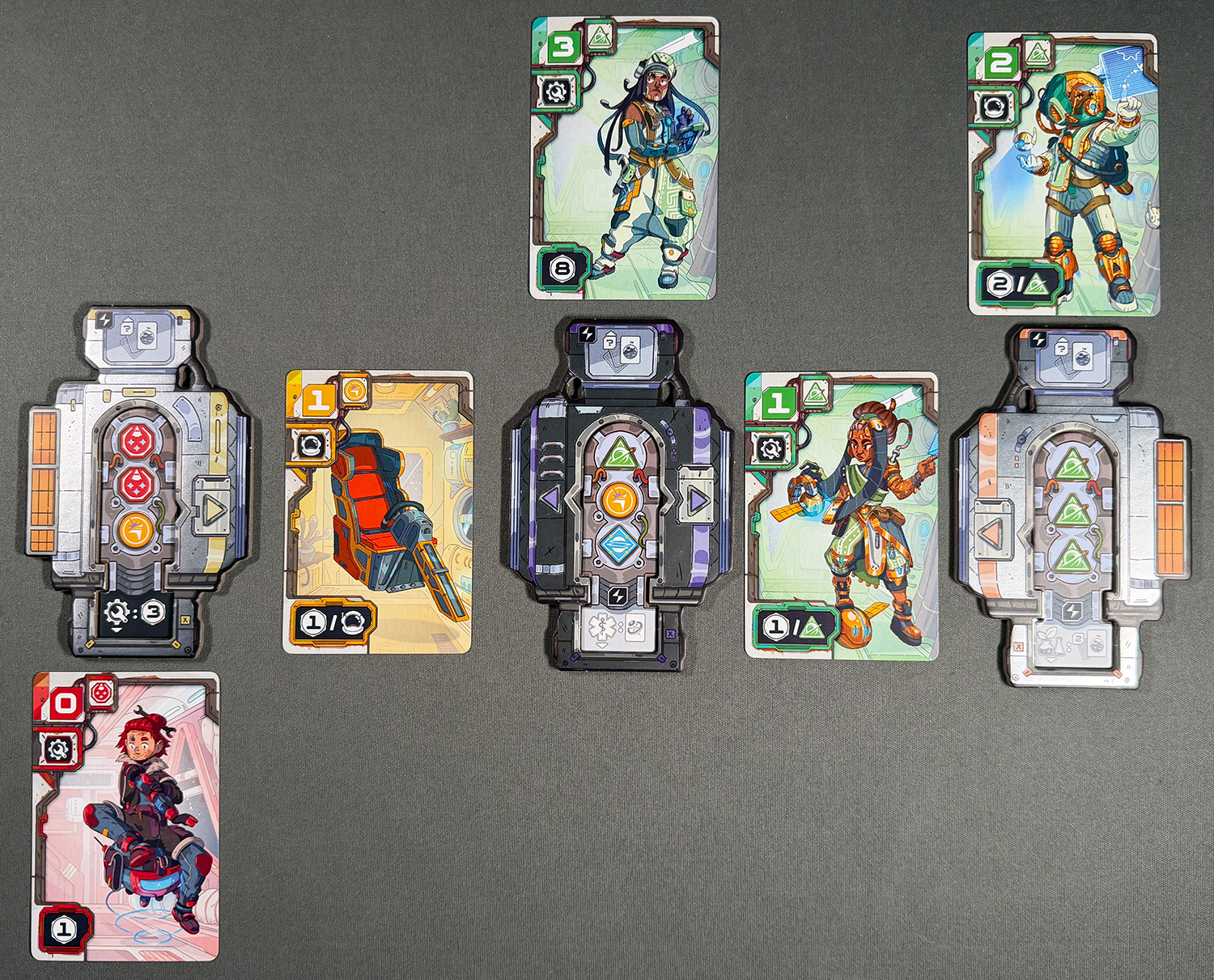
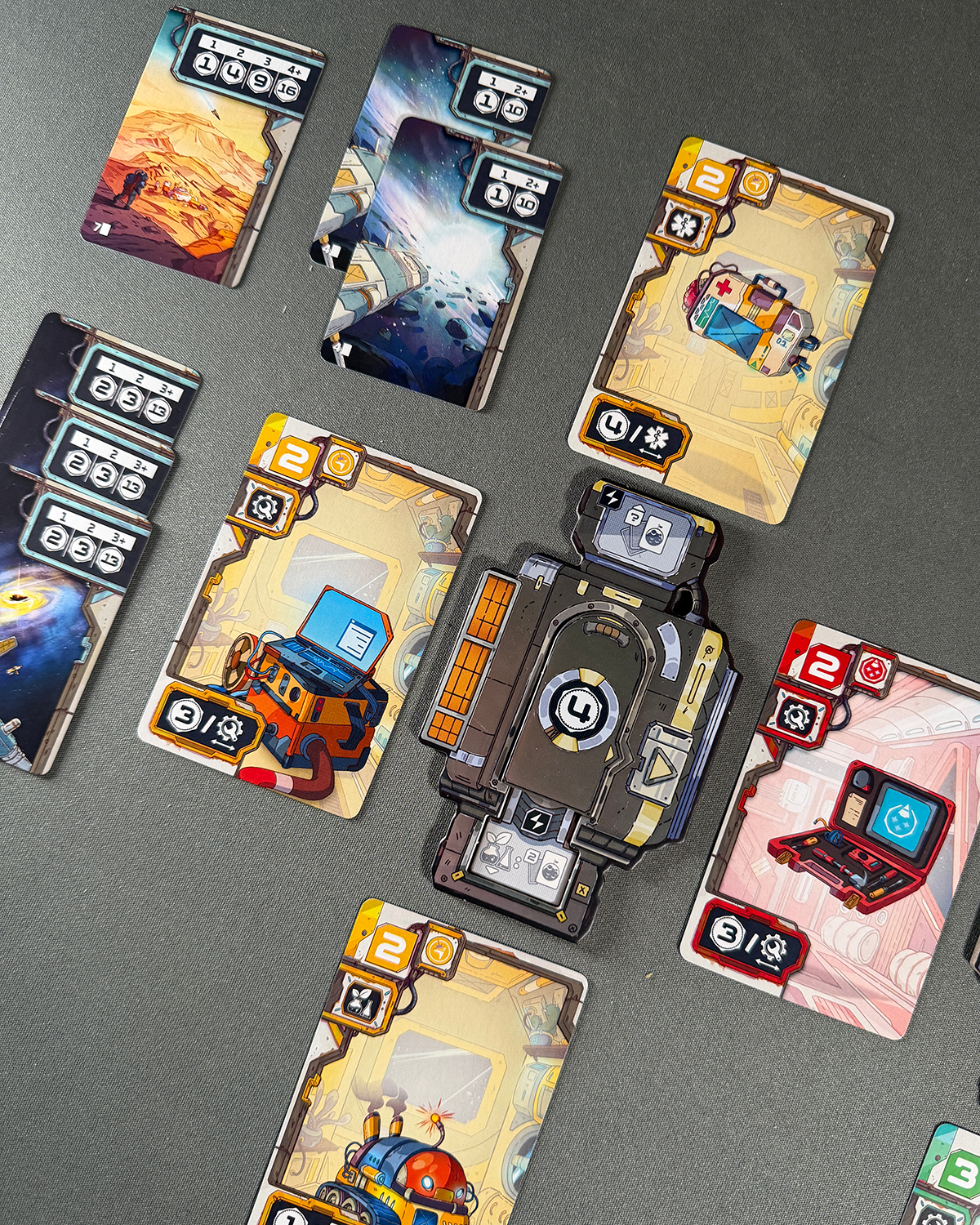
Countdown from ten, then lift off… the lid of the box! Shuffle all the larger cards to form a draw deck. Give each player three capsules, which they place in front of them with a card width between them. They will also need three objective tiles, which they can place in any of their capsules. Place the boost scoring objectives in three piles of descending order, then shuffle the smaller project cards and place those to one side. That’s it, you are ready for take-off!
©boardgamereview.co.uk
Gameplay
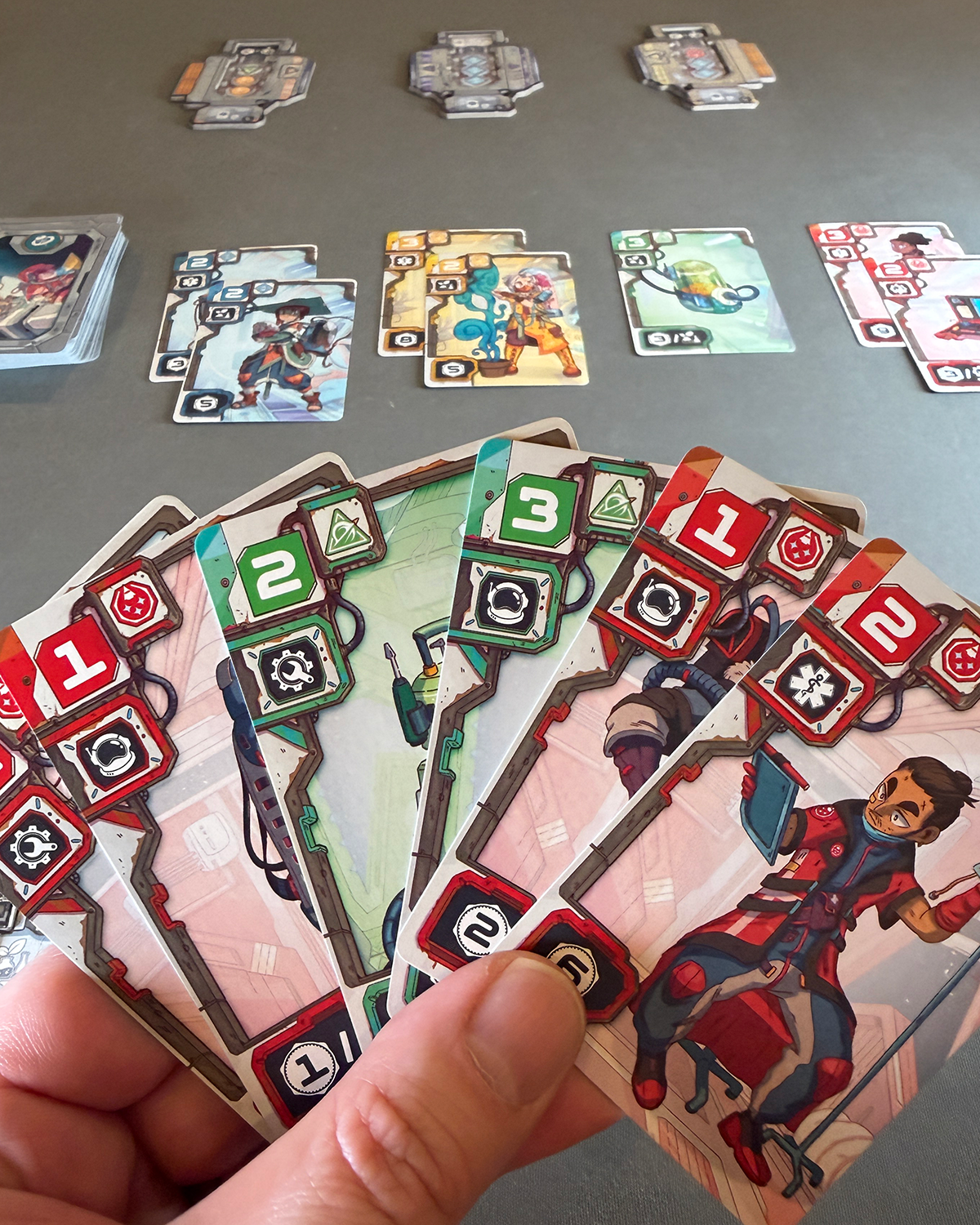
You have three actions to consider on your turn. The first option is to draw three face-down lab cards, of these you can keep all cards of any one colour, any cards of a different colour are placed in an area of the table that the rulebook calls the recruitment centre.
The second available action on your turn is to draw cards of one colour from the recruitment centre, there is less risk in doing this obviously as you can see what you are taking.
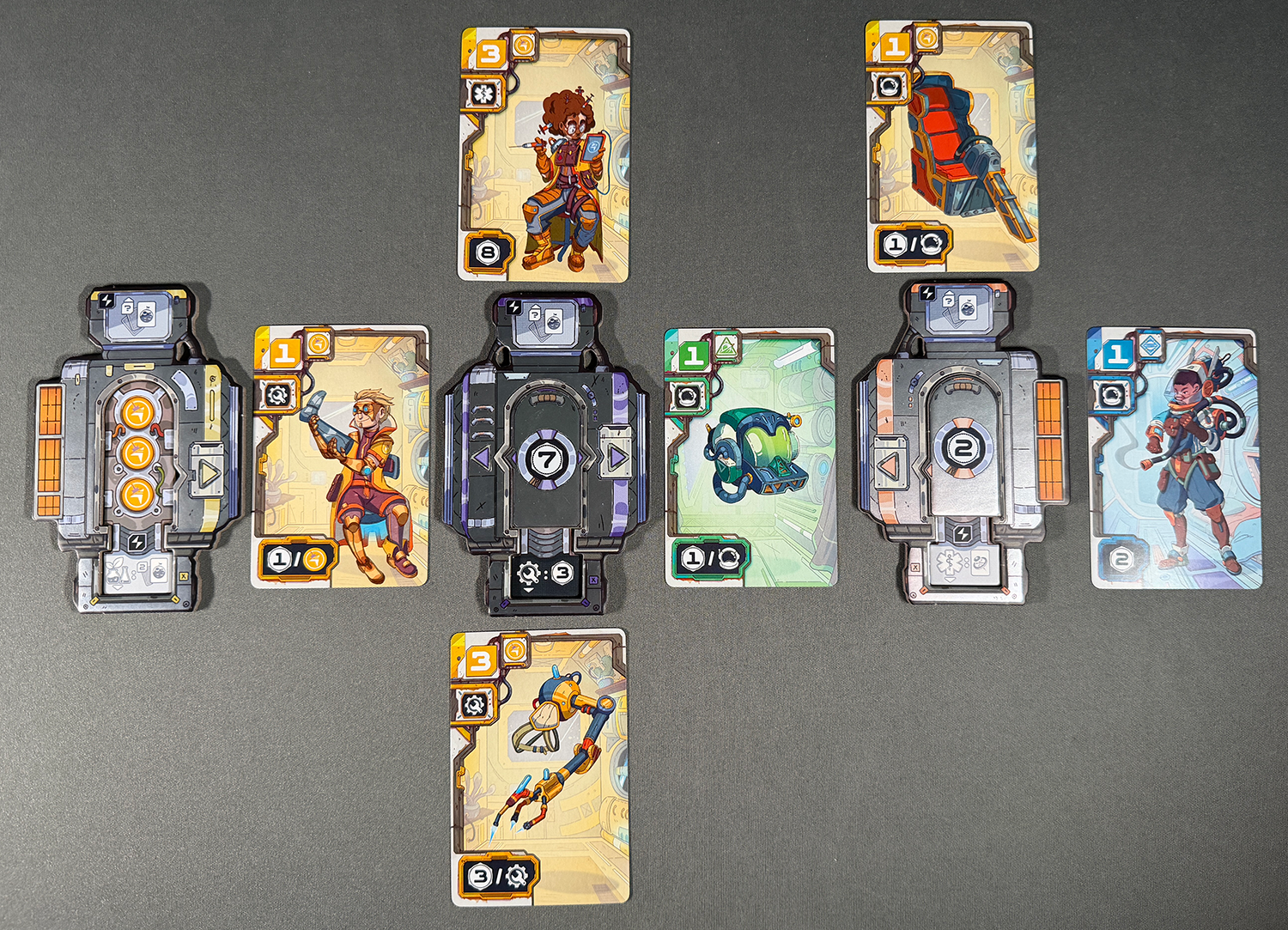
The final option is to place a card or cards from your hand to your lab slots. Cards are paid for with other cards, so a card cost of two requires you to discard two cards to pay for it. If ever you have five or more cards in your hand at the start of your turn, this is the option you have to take.
Cards placed above your capsules allow you to draw project cards equal to the cost of the card, however, you only get to keep one of these. There are opportunities to get additional project or lab cards by placing a specific type of card below your capsules too.
All lab cards have point scoring opportunities, ranging from straight-up points to multipliers for certain types of cards. There is also some cards that score points for certain cards that are in the same row as it.
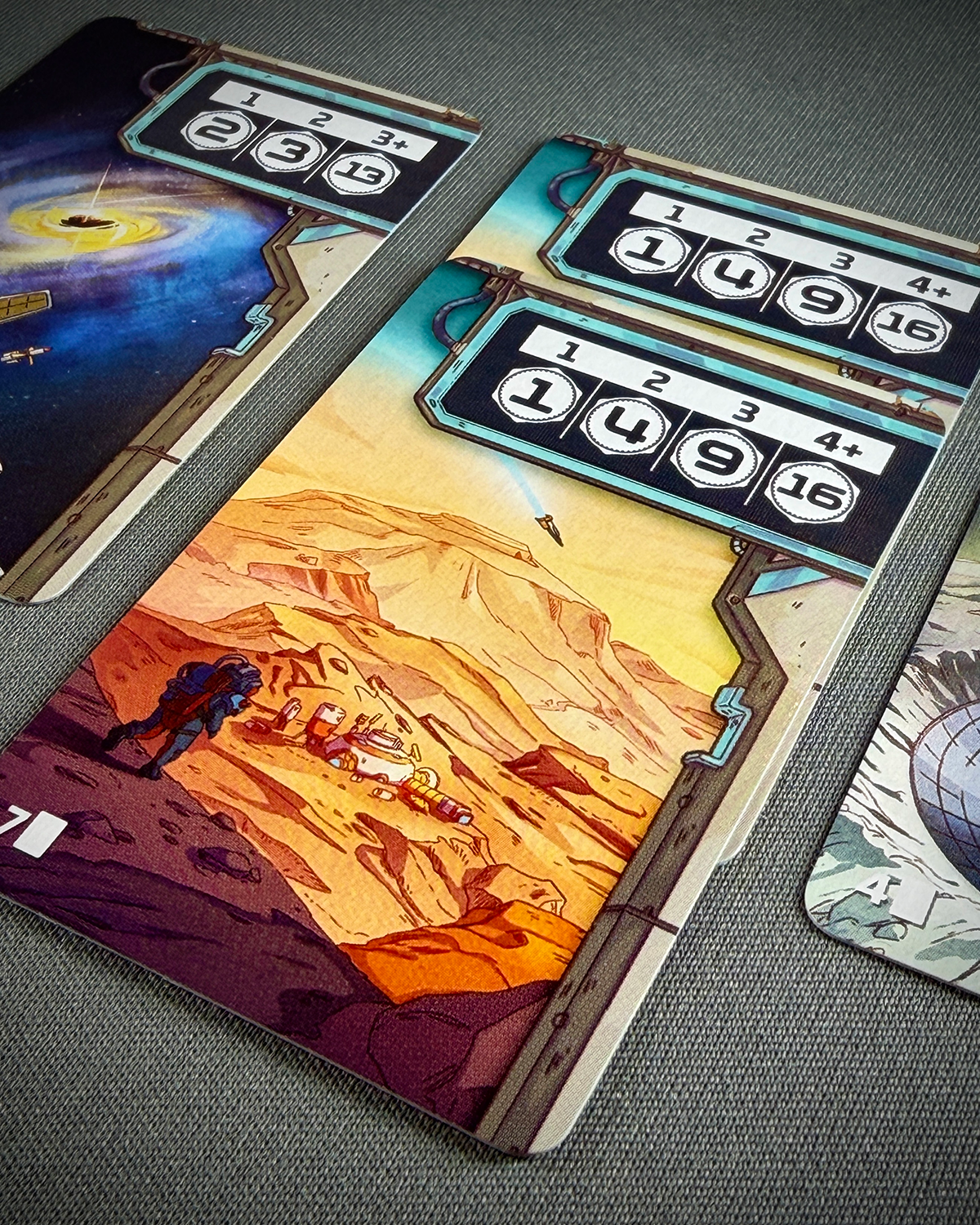
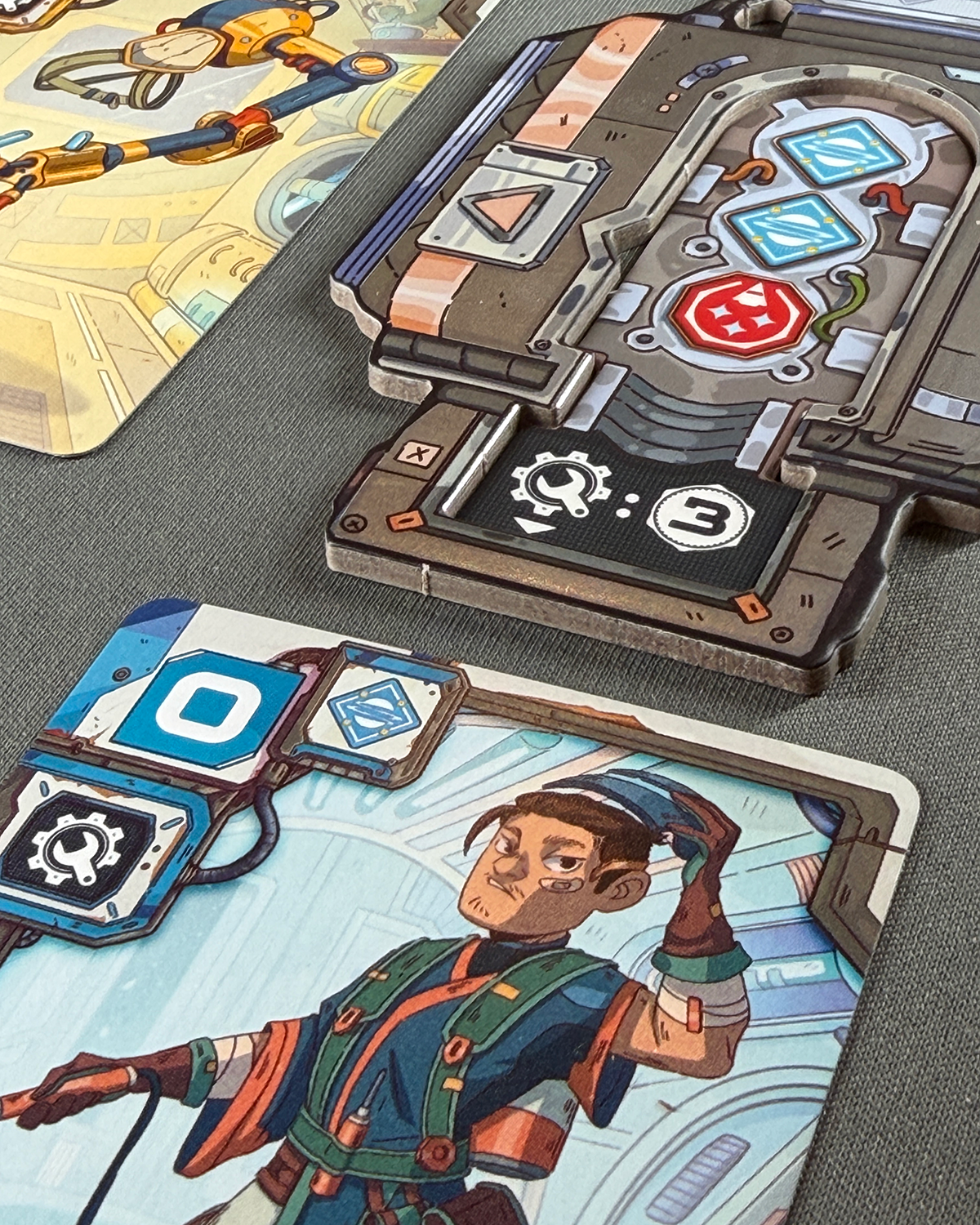
If you encircle a capsule with four cards you take the highest value boost scoring tile for that capsule, these will score end game points and two of them also offer a bonus card.
The game ends when one player fills their three capsules with boost scoring tokens, or if one player has placed ten lab cards. All other players can play cards in their hand and then the scores are tallied. Most points, wins!
©boardgamereview.co.uk
What it’s like
I really like a game that uses cards as currency like this. It creates a wonderful tension of what to discard to pay for the cards you want to play. Sometimes it’s obvious, but other times it is painful discarding things you would ideally play as well.
The other thing I really like about Space Lab is how you gather cards. The risk of drawing three is tempting as you could get two or three cards of the same colour, but knowing what you will get if you go to the recruitment area, is also often enticing. When drawing blind, the cards you discard go to the recruitment centre and you have to be aware not to give away anything too good for your opponents to take either. It’s all geared up to push and pull the choices that you make.
Often however, you will just be taking the most cards available to you to use as currency for any cards you have already got in your hand. That can make it feel like you are going through the motions.
Generally play goes around the table at a decent pace, only slowing down when someone is deciding what to play from their hand and where. Generally short, snappy decisions can be made and I like the pace of the game.
The starting objective tiles can really lead your strategy and leaning into this, while paying attention to the cards you have access to is all part of the game. Overloading on a particular colour or type can pay dividends. That said, I have seen players rush to fill their tableau with inexpensive cards and end the game before others have maxed out their scoring combos, snaffling a cheap win.
The smaller Lab cards are a bit hit and miss and while they can be worth decent points, they can also dish out a bit of bad luck and see you working hard for not many points.
©boardgamereview.co.uk
Table Presence
I can’t decide if the theme makes sense or not, equally I rarely care about such matters. It might’ve been quite cool if it was set in the same world as Faraway, but it’s not! Probably hindered by it being a different publisher.
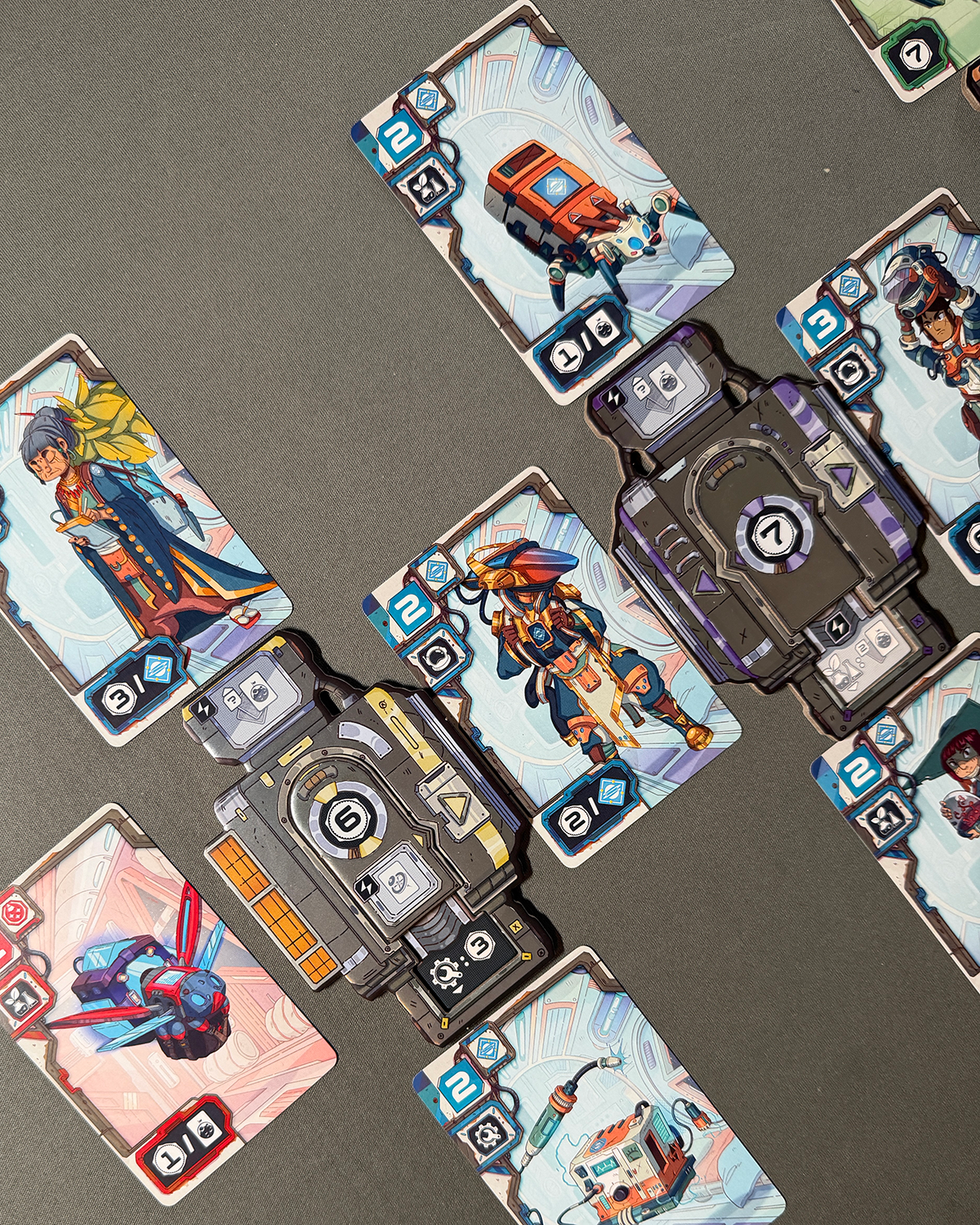
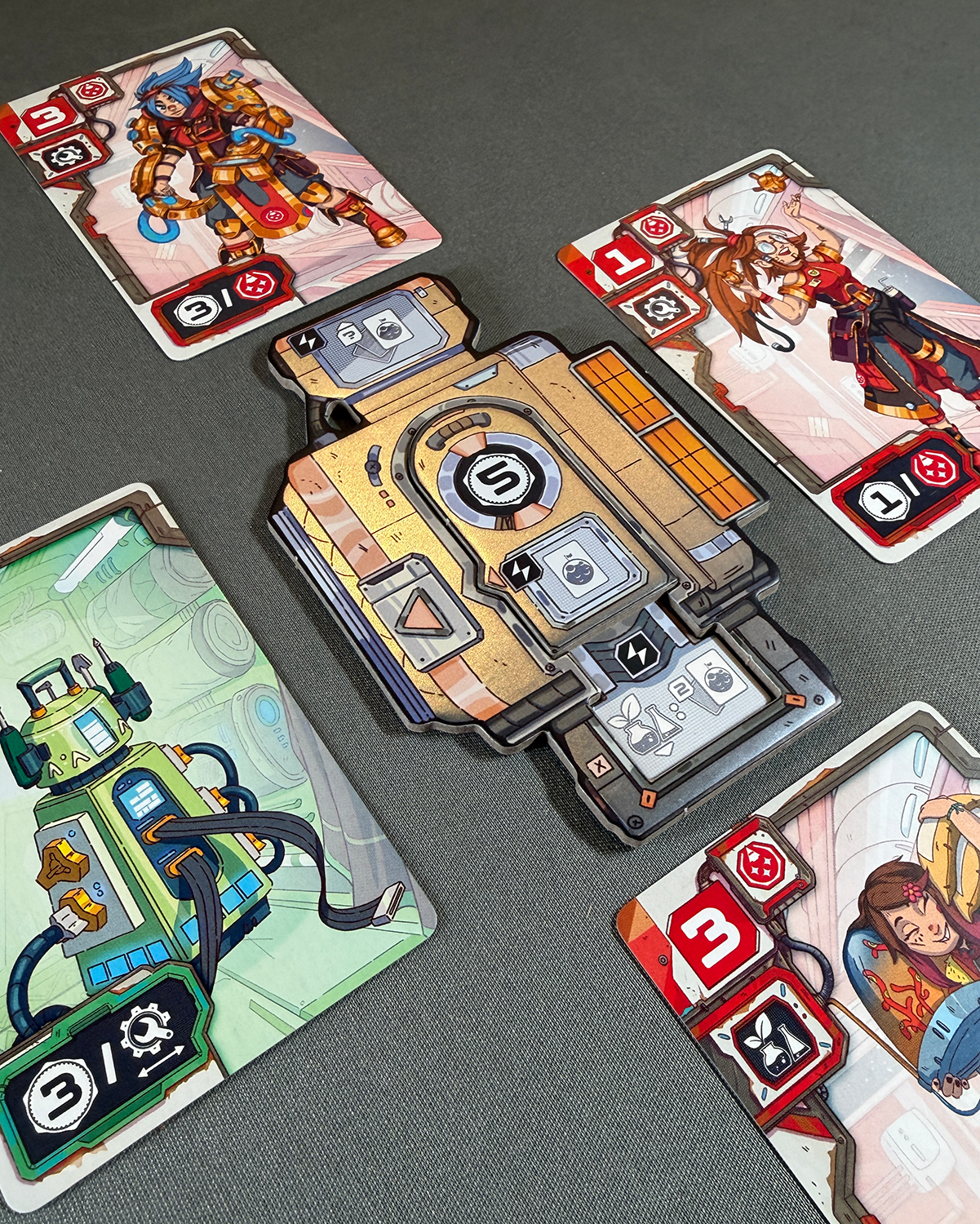
Space station theme aside, the one thing that stands out is that this game is SHINY! The box is shiny like those 1980s Disney foil postcards you got, they were gaudy then, but I appreciate it now in a retro cool way! Most people probably don’t even remember them! Inside the box, the capsules are shiny too, but in a more traditional less 1980s way! Perhaps I should’ve gone for a song reference from Moana to make it a little bit more current!
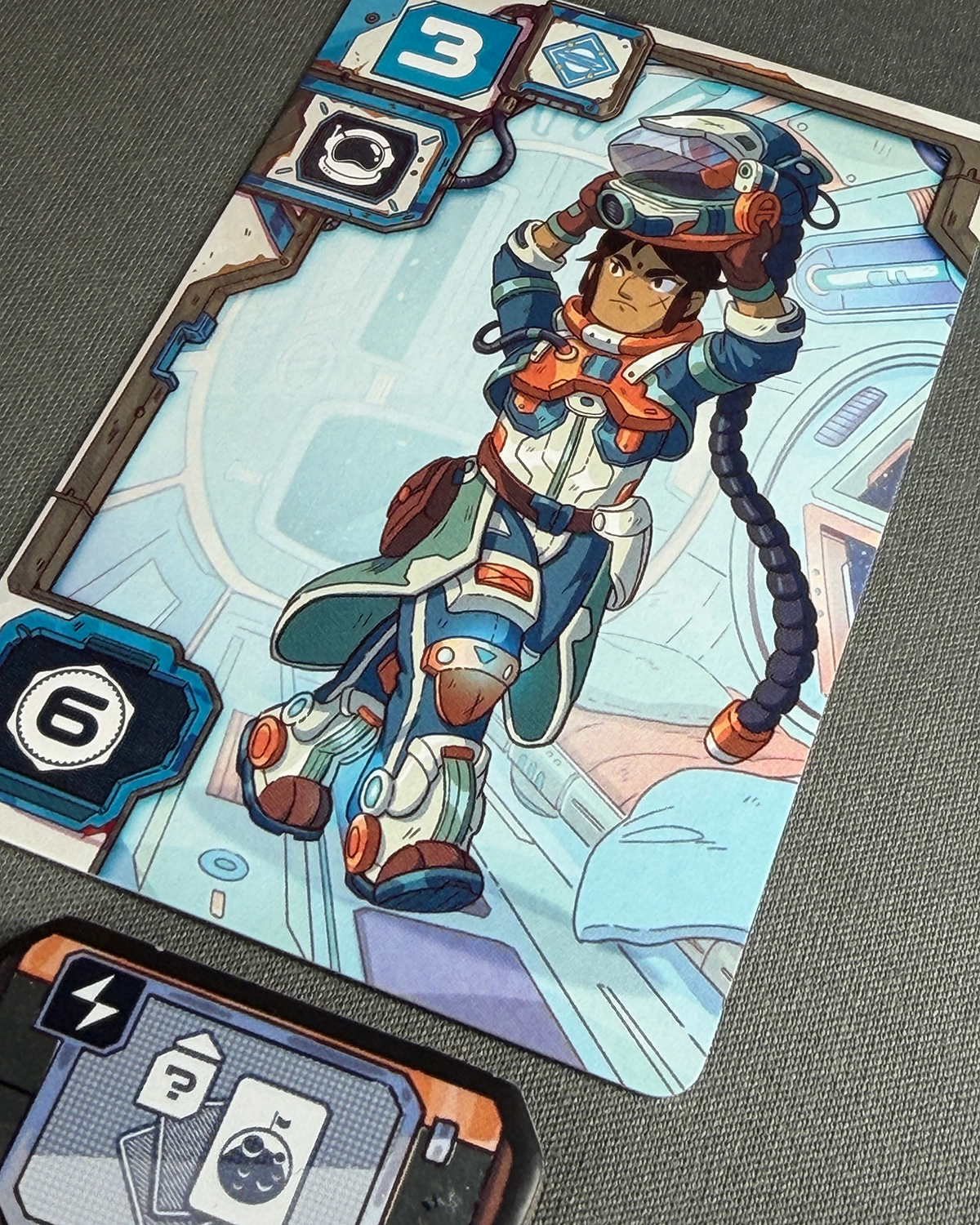
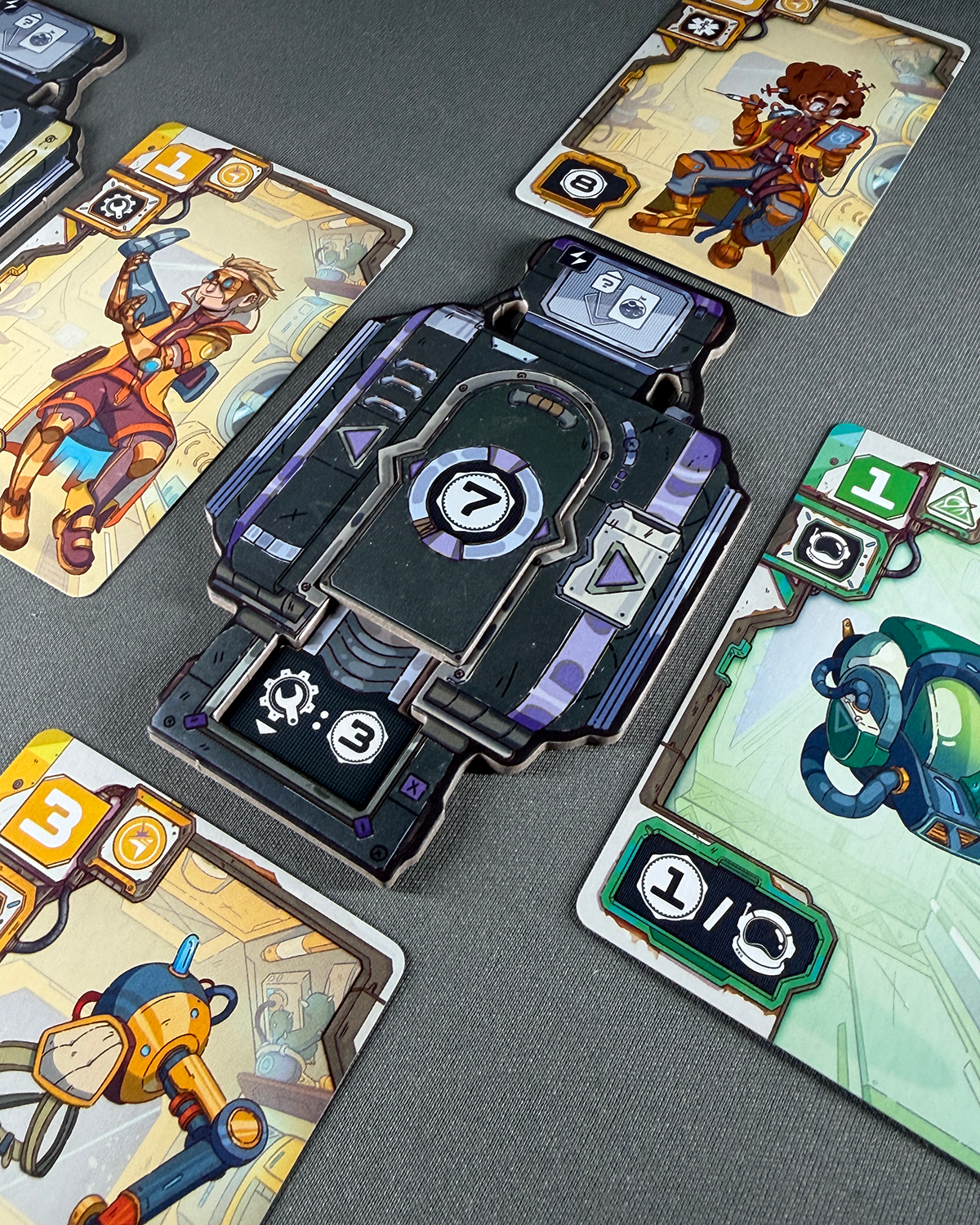
I like the artwork throughout, although I would prefer to see less equipment and more characterful astronauts. I think I would’ve preferred folding playmats to place my tableau on, but I realise this would’ve probably unnecessarily bloated the box size and with it the price, so it’s an unrealistic hope.
Iconography is generally easy to learn and is clear. Each colour is also represented by different symbols which will help some I am sure.
The rulebook was good enough.
©boardgamereview.co.uk
Final thoughts on Space Lab
Space Lab is a good game. All the elements work smoothly and I am enjoying myself when I am playing the game. I guess my only reservation is that I cannot say what Space Lab does that is different or revolutionary from other games that have come before it. It doesn’t have that little twist you might hope for.
As time goes by, it becomes harder and harder to get that fresh and different take on mechanics that have all been done before. Perhaps the trouble is Faraway set quite a high standard, with its reverse scoring that at least made it stand out from the crowd. Space Lab doesn’t have that. What it does have is very enjoyable gameplay with familiar mechanics that work very nicely together. I like playing it a lot.
©boardgamereview.co.uk
Key Facts
Number of players: 1 to 4
Board Game Review Recommended Age: 10+
Publisher’s Recommended Age: 10+
Playing Time: 30 minutes
Setting Up and Take Down Time: 2 minutes
Designers: Johannes Goupy and Corentin Lebrat
Publisher: Studio H / Hachette Board Games UK
RRP: £17.00
Summary
Space Lab may not offer anything new and unique, but it does offer very enjoyable gameplay with its familiar mechanics in the space of 20 to 30 minutes!
-
Artwork and Components
-
Complexity
-
Instructions
-
Interaction
-
Value for Money
Overall
Pros
- Card draw
- Scoring objectives
- Quick and fun to play
- It’s shiny!
Cons
- Luck of the little Lab cards
- Not much interaction
- Similar to other tableau builders
- Options are a little limited
Need more games?
If you already own Space Lab and enjoy it, or are looking for other inspiration, you might also like these similar games:
Buy Space Lab
If you want to buy this game after reading our review click on one of our affiliate links below (note there has been no affiliate links until this point)

Reviewer’s Note
For clarity: we don’t get paid for our reviews. However, we were kindly gifted this game by Hachette Board Games UK. We have tried not to let this affect our review in any way.
We may however earn a tincy wincy commission if you buy a game having clicked one of our affiliate links like the one above… this hopefully gives us a bit of pocket money towards hosting costs and new games to review!
As an Amazon Associate I earn from qualifying purchases.
We also are an affiliate of Board Game Prices, a price comparison website for Board Games.
These affiliate advertising programs are designed to provide a means for sites to earn advertising fees by advertising and linking to their websites.