
Druids of Edora Review
Advert: this game was gifted by Ravensburger, this has not affected our opinion.
Whenever a new board game comes along that catches my eye, I always do quite a lot of homework to ensure that I am likely to enjoy it. However, sometimes a game gets offered to me, like Druids of Edora, before there is any real information about it out there. The information I had was that it was designed by Stefan Feld and that it involved dice placement. Both were big ticks so I took the minor gamble.
Fortunately for you, that means there is now a review of Druids of Edora for you to read so you don’t have to be as blind as me if you decide to go for it! Just to be perfectly clear, this is that review!
I rarely set the scene of the backstory of the game, and this review will be no exception, mainly because there doesn’t appear to be one other than you are a druid bumbling around an enchanted forest. Fortunately, that’s where comparisons end with the game Enchanted Forest!
©boardgamereview.co.uk
Setup
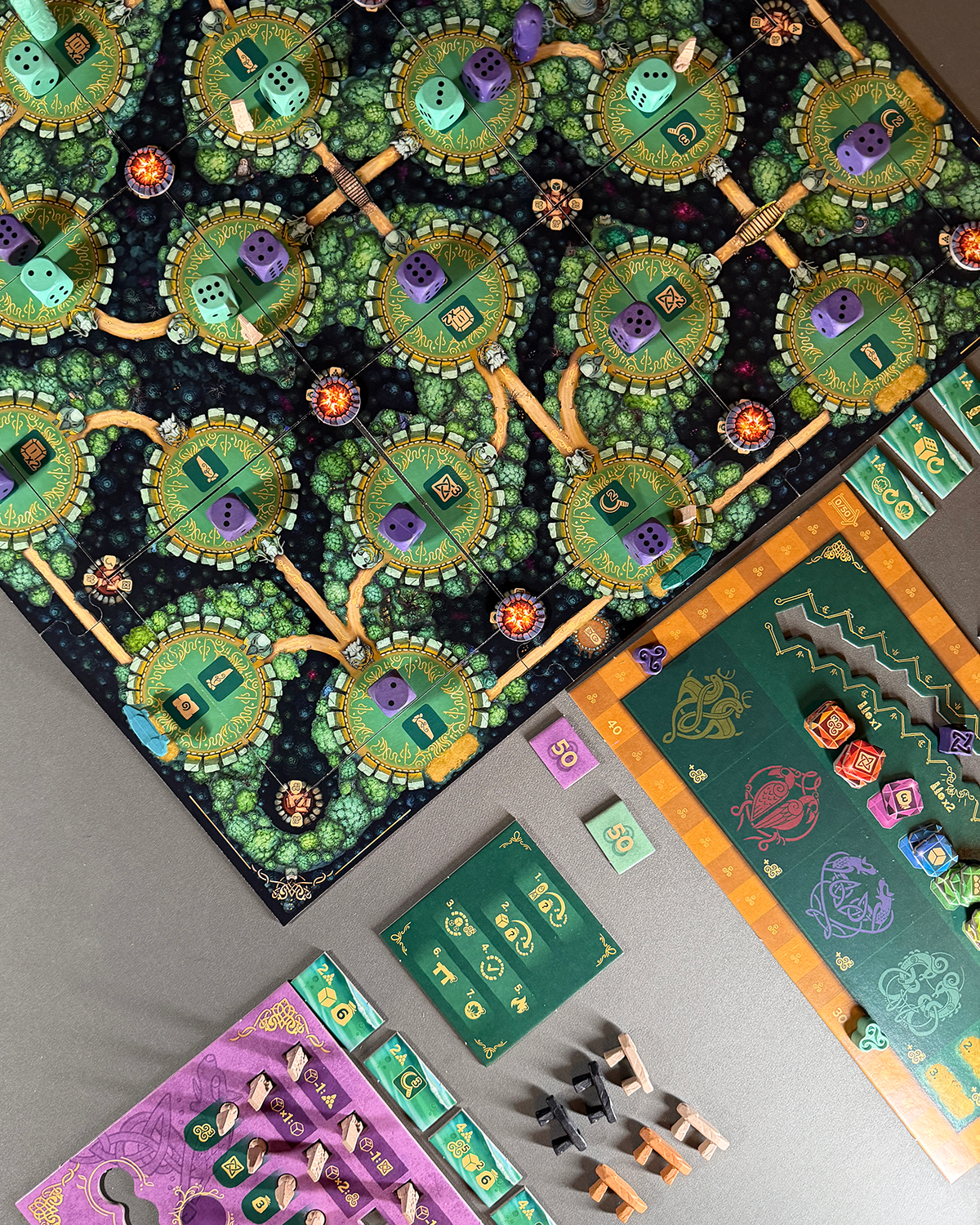
There is a bit to unpack and setup. For a start the board needs to be created by building a frame and laying out tiles. Which way up depends on player count so pay attention to that.
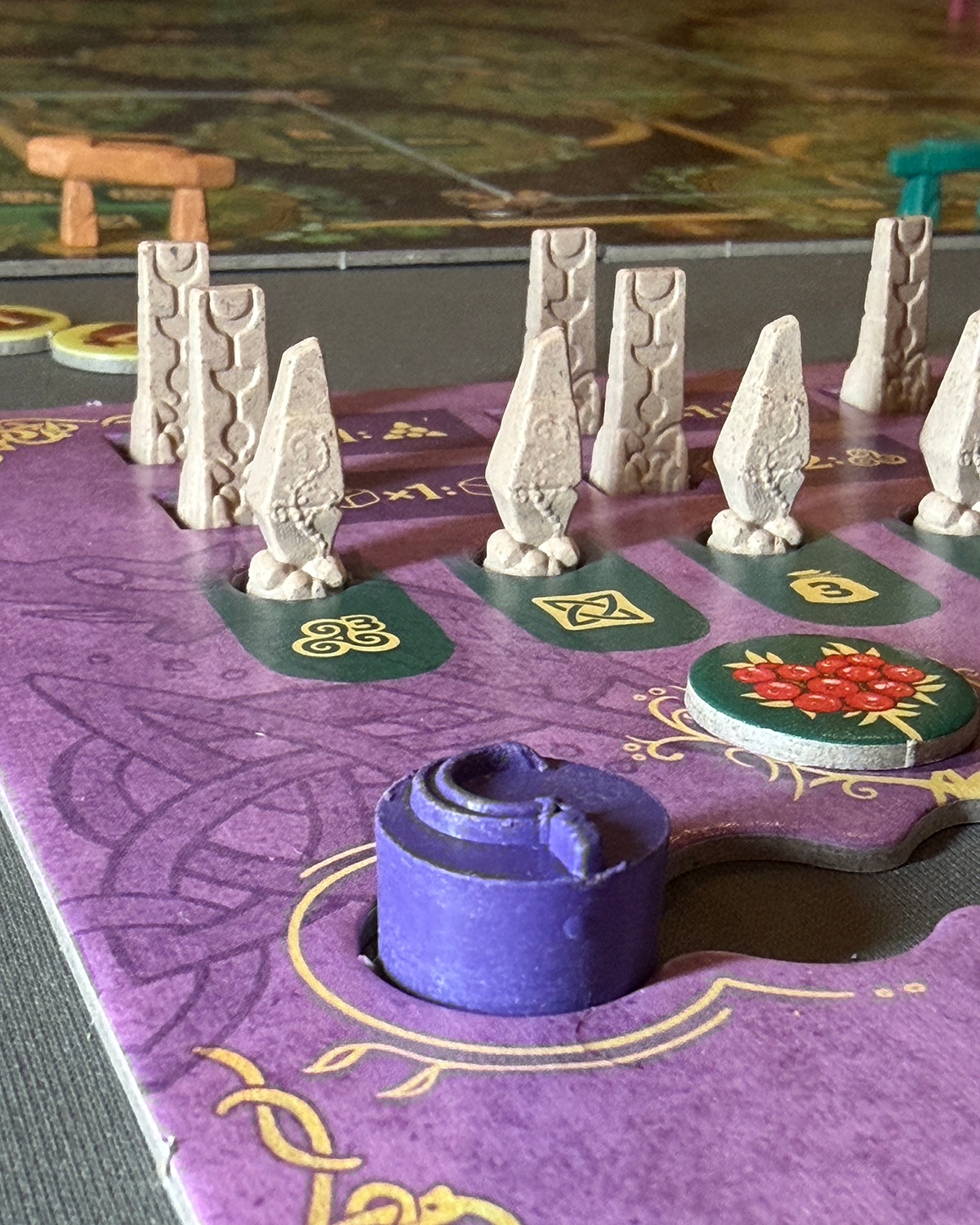
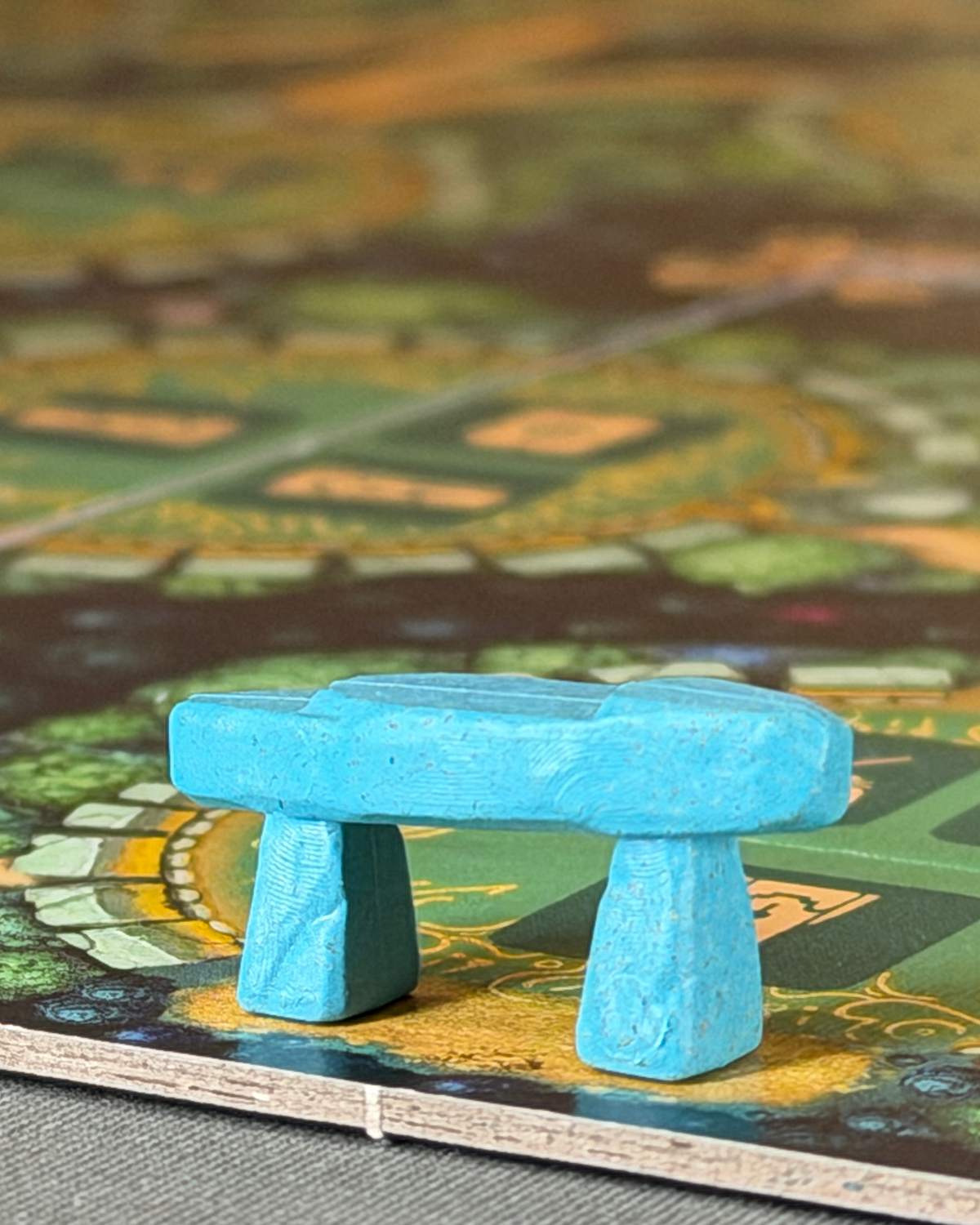
Next the stone archways need to be arranged randomly around the edge of the board, these dolmens must always be at least two spaces away from another of the same colour.
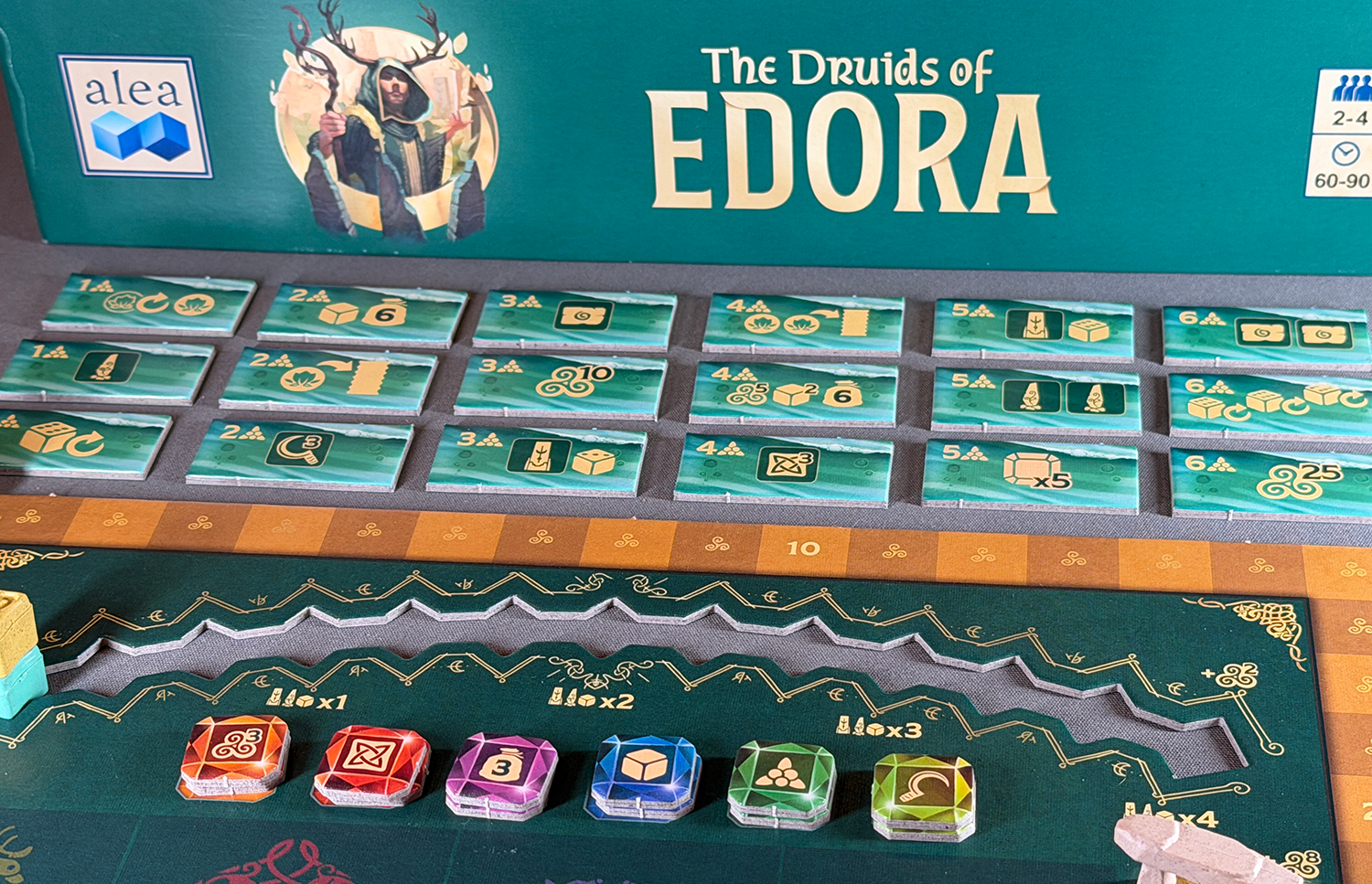
The Overview board with the score track will need to be set up with the spare beige Dolmens, Amulet tiles, player markers, and dice (once rolled). The Oracle site and potions also need to be laid out as per the rulebook.
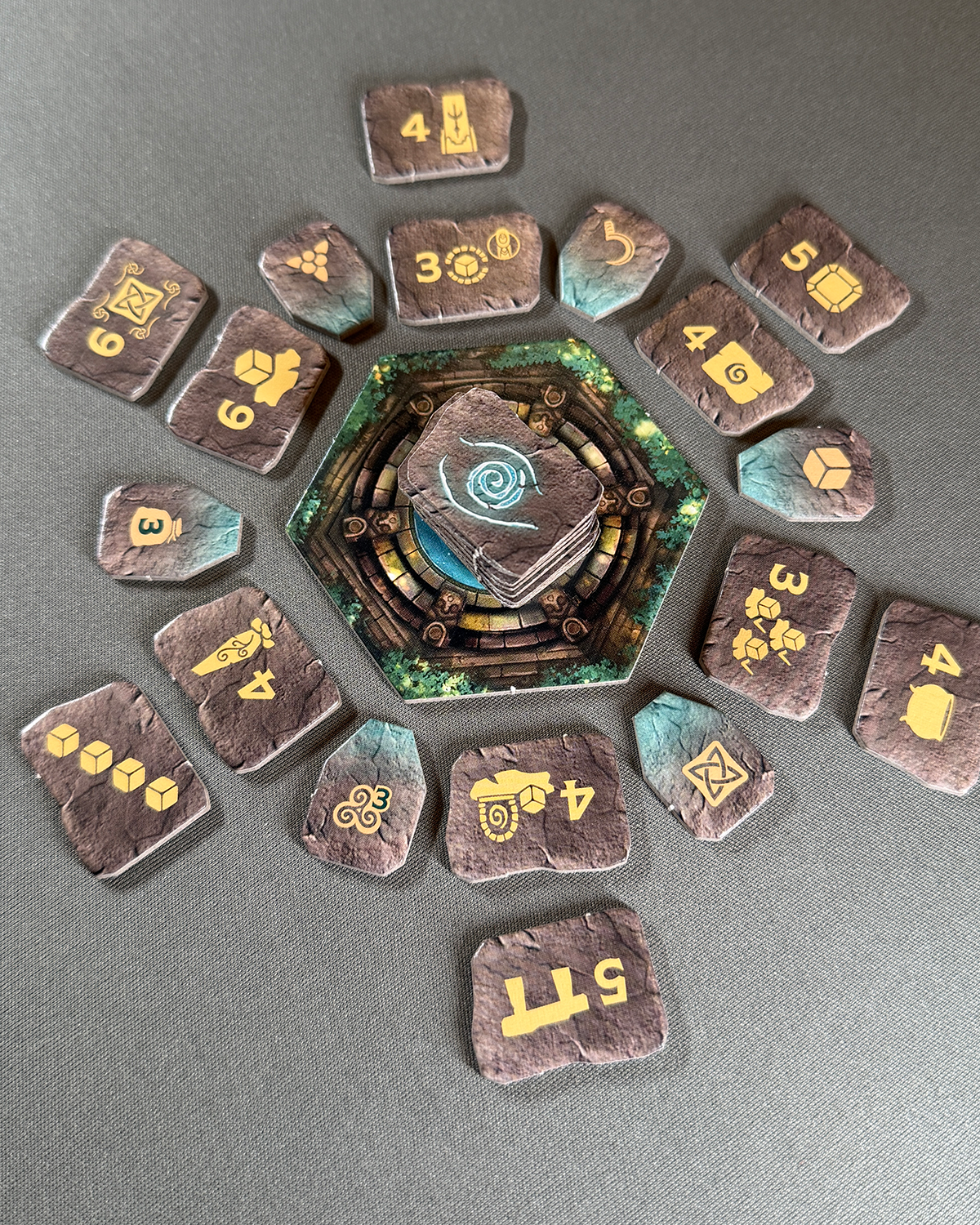
Players also need to set up their player board with Medicinal Herbs, Standing Stones and Runestones. They also take 15 Provisions and a random stone tablet.
©boardgamereview.co.uk
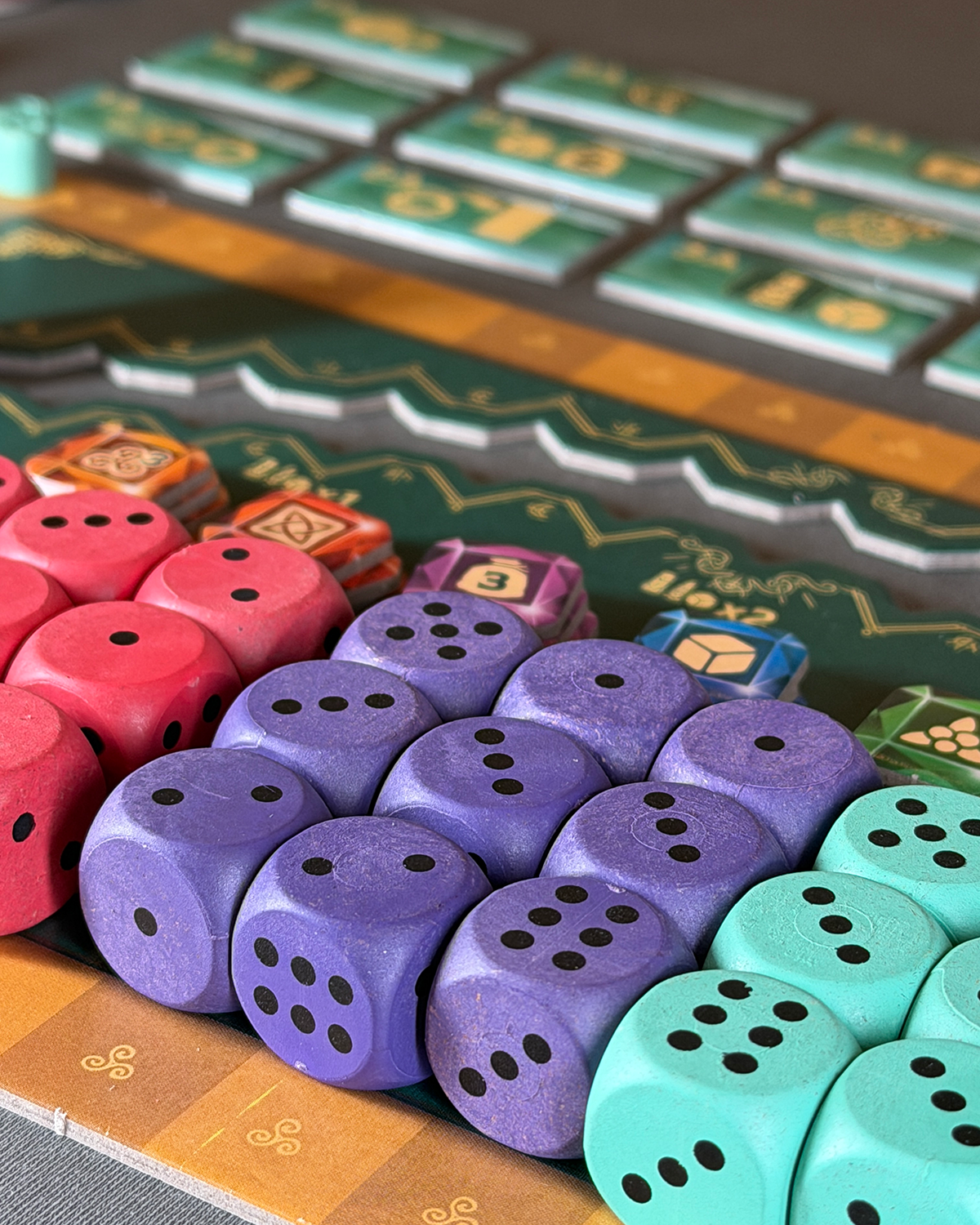
They roll four dice and the player with the highest total will become the first player. The remaining nine dice get rolled and become the general supply for each player on the Overview board.
There is a so-called ‘advanced’ setup which I prefer and wouldn’t play without. For this, the Medicinal herbs are placed in the same order for all players and only one person rolls the remaining nine dice. Then, all other players set theirs to the same pip values for the general supply. I think this mitigates the slight luck of the roll and generally makes the game fairer which is why I recommend it, even for new players.
There is a bit to setup, but it isn’t too bad if everyone mucks in.
©boardgamereview.co.uk
Gameplay
The game will end when at least one player has placed their last dice on a shrine, which means you will only have thirteen rounds to get the most points.
On your turn you will move your druid to a shrine (one of the circles on the board) via a path or paths, paying provisions along the way. The further you move the more it will cost, so planning and optimising is key. The last thing you want is to be a ‘druid in distress’ as that means you take six provisions and a dice from the general supply. That is definitely a suboptimal move!
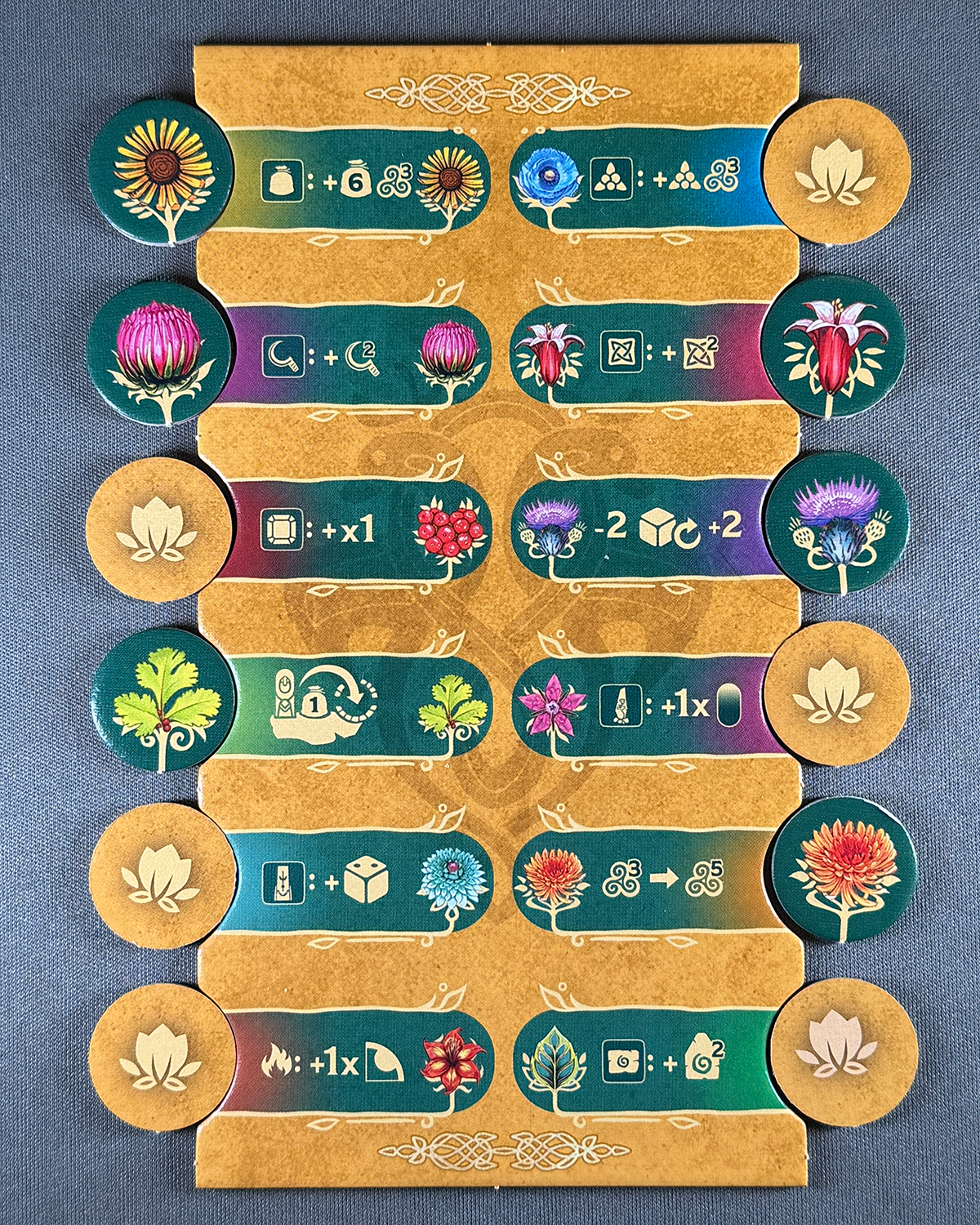
Once at your chosen shrine you will place a dice from your supply on one of the available spaces. The pip value of the dice will need to be paid for in provisions. The dice will also trigger one of eight actions depending on the icon below it. None are better than others, it just depends on your strategy and requirements.
If ever two dice share the same shrine, the owner of the highest pip value dice gets two points. If ever you link two Dolmen arches with a continuous line of uninterrupted dice, you will claim both arches and get two points per dice in the shortest route.
The game will end on the round that one player has used all their final dice. Points obtained during the game will be added to points for left over resources, the various tracks, stone tablets and the amulet area.
Then the shrines will be scored. Each shrine will be controlled by the person that has the highest pip value, ties are settled by the knowledge bar. The dominant die will gain any runestones or standing stones on the shrine with it regardless of who placed it. Total the number of dice and stones you control and multiply that by the number on the knowledge bar. Most amount of total points wins the game!
©boardgamereview.co.uk
What it’s like
In Druids of Edora most things you do will gain you points or resources. It is how you optimise these actions that is the important strategy. This is amplified by only playing a maximum of thirteen turns.
Having so many good options and not enough turns is a tantalising predicament. I relish the challenge and always enjoy this kind of tight gameplay. It will induce some chronic procrastination from some players and so proceed into a four player game with a bit of caution.
I would also say there can be quite a bit of tension when playing Druids of Edora. That’s not because there isn’t enough space in each shrine, there is. It is more that the actions differ quite wildly and if you’ve factored something into your plan and it may no longer be available you begin to sweat as your opponent teeters over the position you want.
When scoring at the end of the game, the importance of the dice pip values you’ve placed really is highlighted, especially if players have gotten up into each other’s grill.
There is a bit of down time as you would expect with so few turns to optimise, but most of the time I’m grateful for a bit of thinking time and planning time too so I don’t really notice.
I’ve enjoyed playing this at all player counts. At two players, you can kinda avoid each other and get away with doing much more of what you want to do. At four you are much more likely to be in each other’s faces!
©boardgamereview.co.uk
Table Presence
Overall I really like the aesthetics, but there are some niggles too. So let’s start with the bad news!
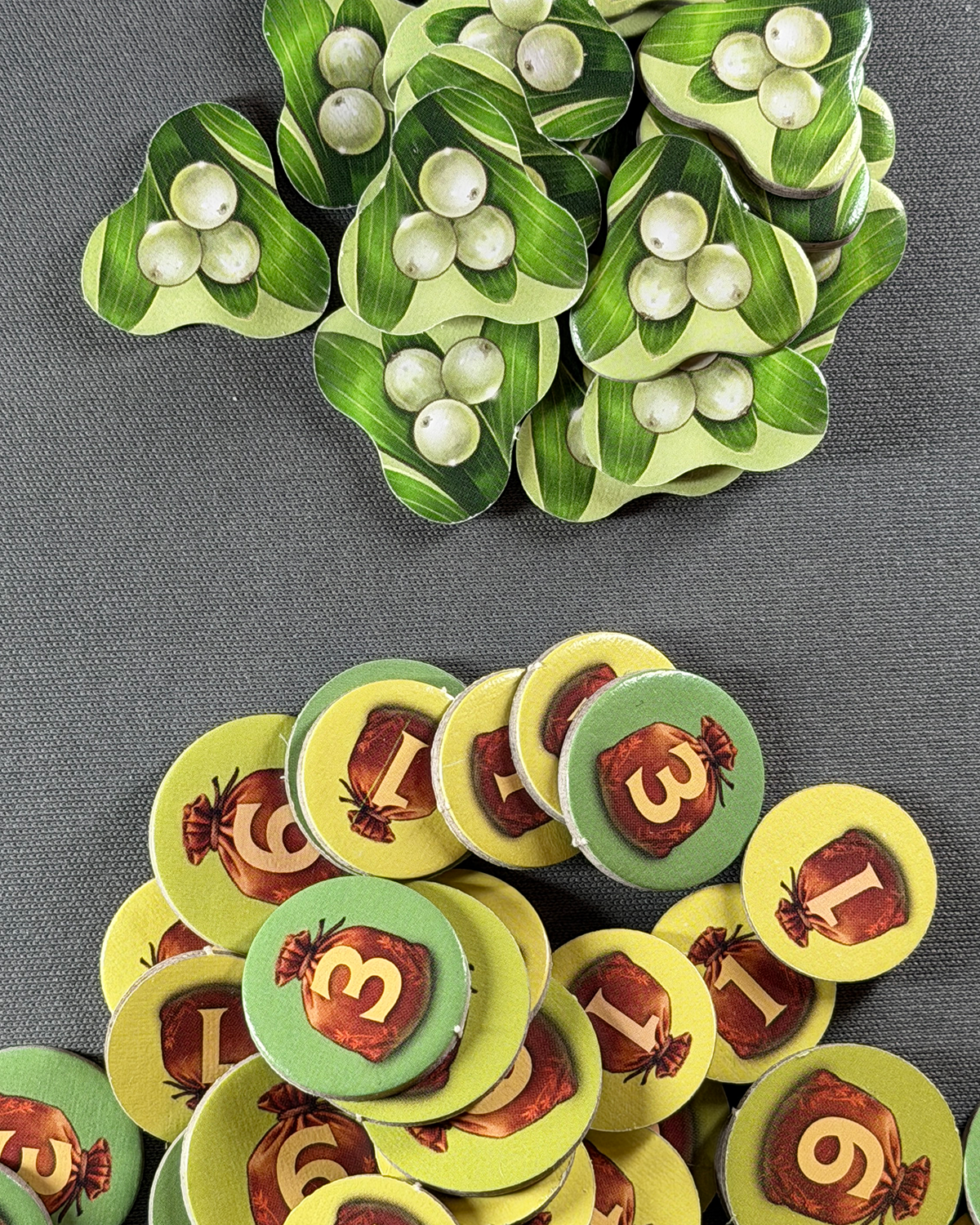
The rulebook is an absolute shocker. A visit to the BoardGameGeek unofficial FAQ forum and you will see a bevy of mistranslated statements that make the game seem bewildering. The layout is nasty and it is really easy to miss important information. The worst offending passage reads when brewing a potion: “mistletoe can’t be saved for later!”. The designer, Stefan Feld, has confirmed that left over mistletoe can be saved for later… that sort of thing really grates and a company like Alea/Ravensburger should really be getting rulebooks checked by native language speakers. At the time of writing the rulebook hasn’t been corrected digitally on the PDF version on the publisher’s website either. Frankly, it’s poor.
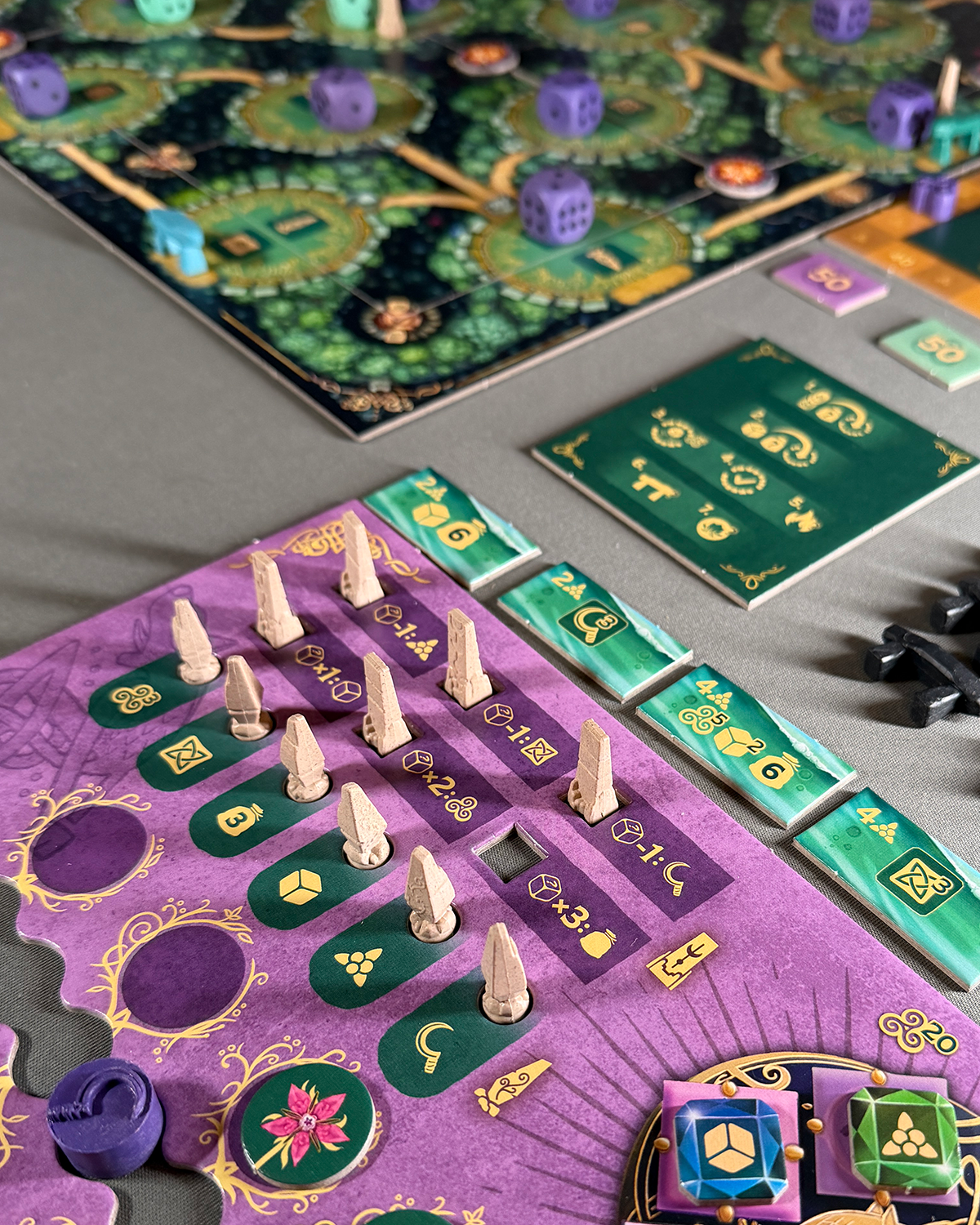
Another gripe is the score track. It is ridiculously hard to move around and so you end up adding your score one step at a time like a 6 year old moving around a Monopoly board. I hate it enough to have commissioned an overlay already. While the iconography is super clear and becomes intuitive, some of the details are a little small on the board to see from afar, especially when dice start to obscure the view.
Super pernickety but building the frame for the board in a three player game involves a bit more force than I would’ve liked.
My final annoyance is that the player aid, that is a separate pamphlet has all the potions and tablets nicely explained and in multiple languages. That is not the negative! The problem is the Magical Herb explanations reside in the main rulebook, so you have to have both out all the time, making the handy player aid, considerably less handy!
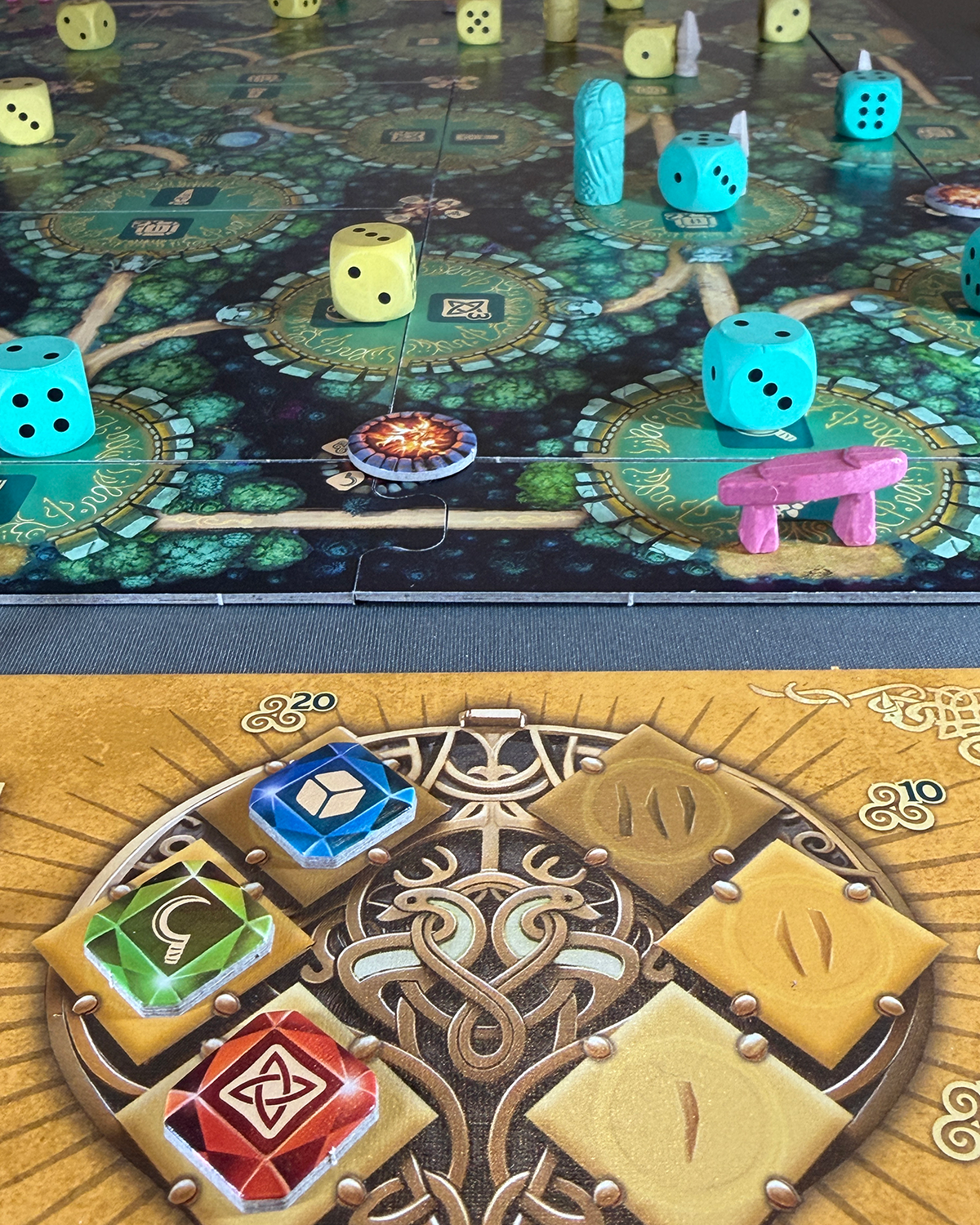
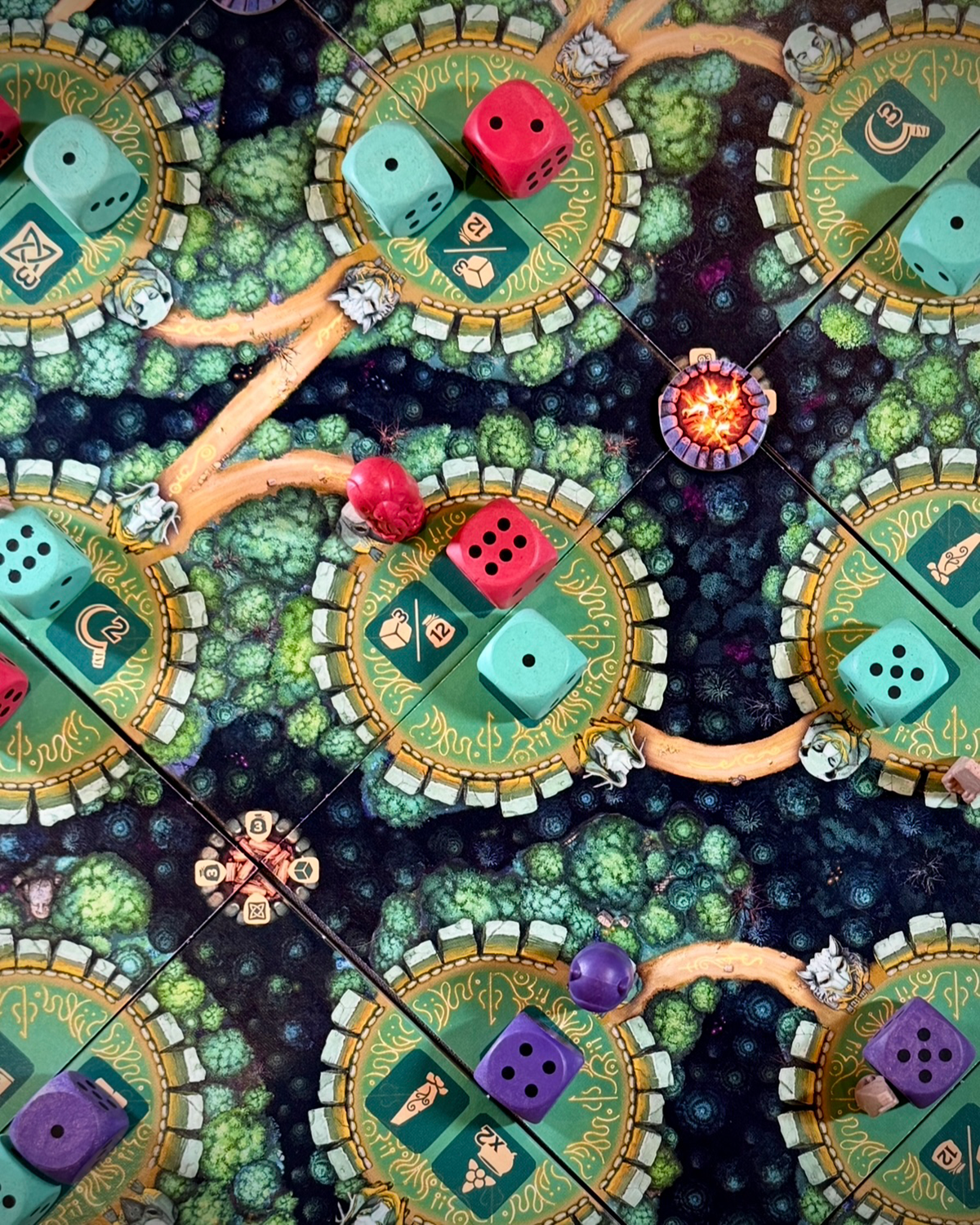
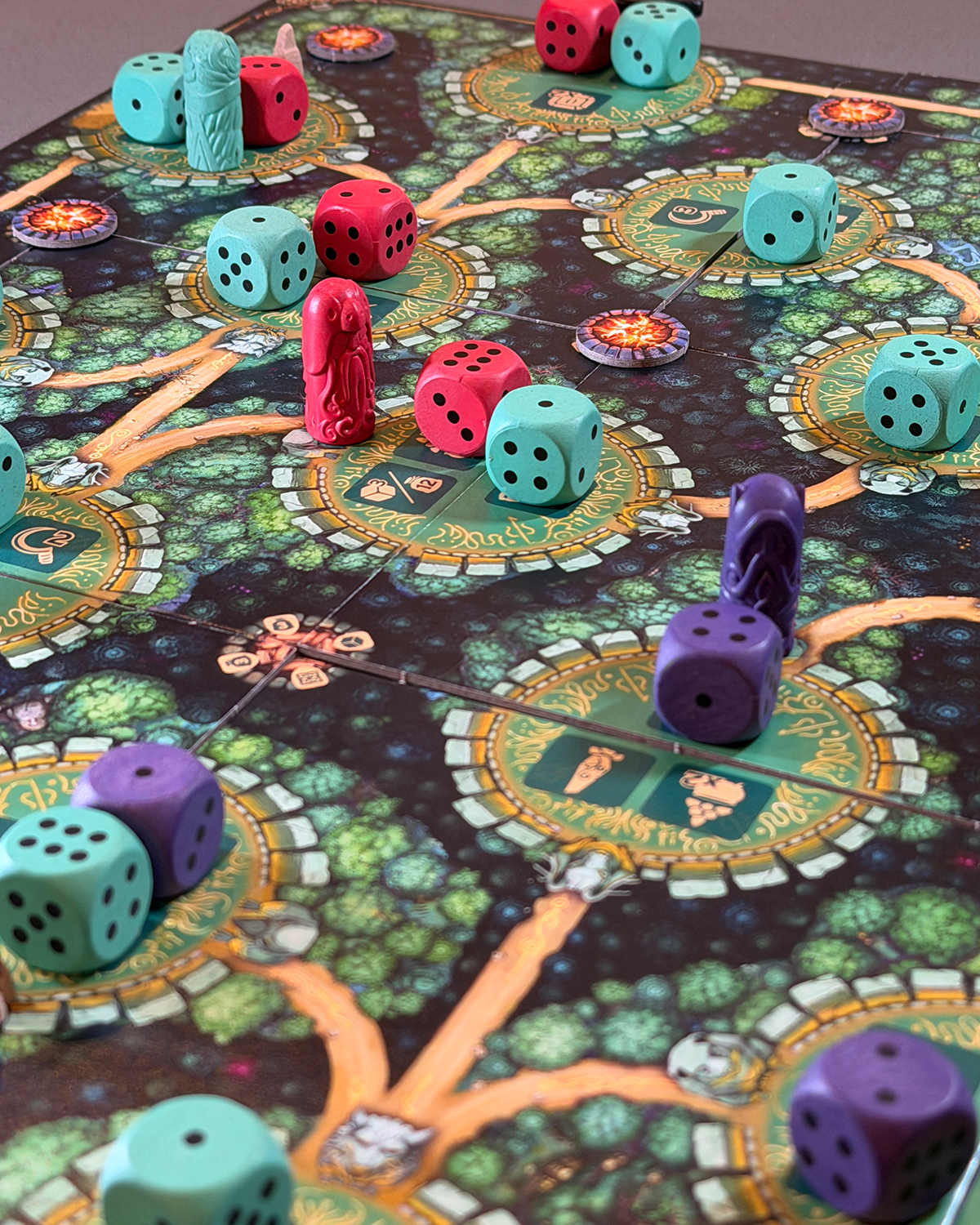
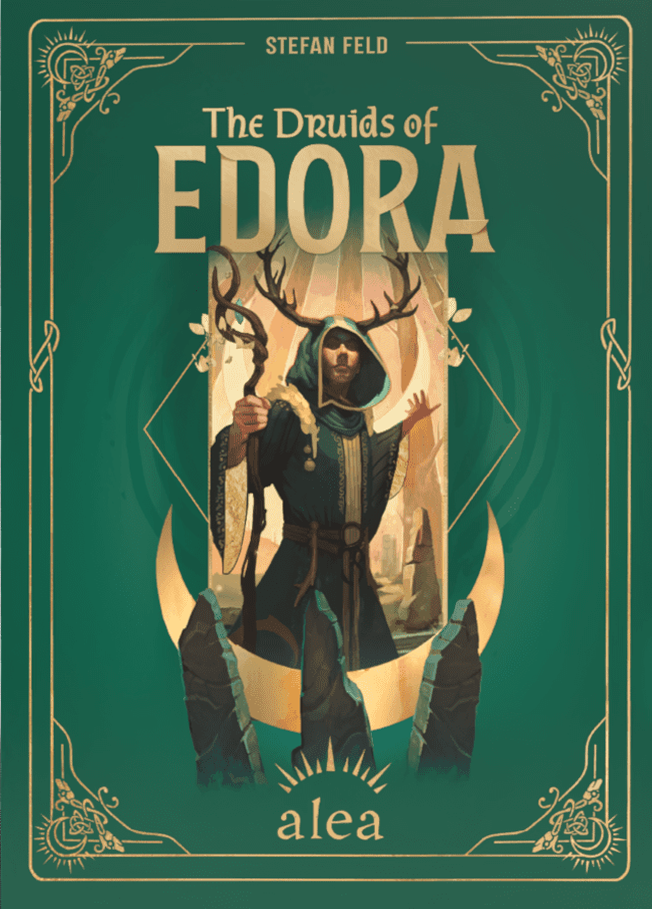
Those quibbles aside there are plenty of positives. The palette used for the players’ dice and components is lovely. The board also looks super, both before and after it is populated.
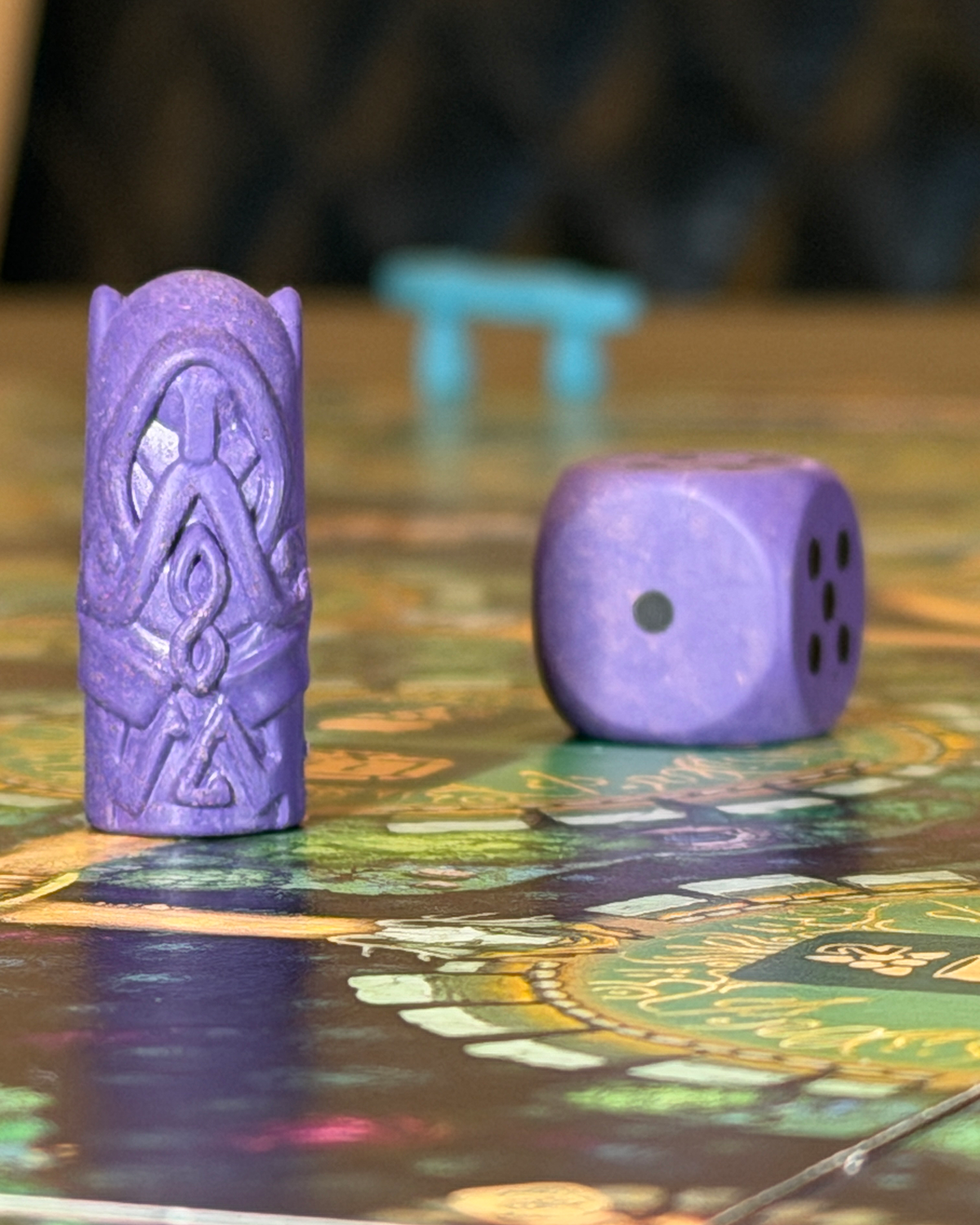
The components use ReWood which I first encountered with Rebirth and I love this sustainable material appearing in a board game again. I think it looks great and its environmental qualities truly superb.
I think it is a lovely looking game overall, especially when it starts to get more populated.
©boardgamereview.co.uk
Final thoughts on The Druids of Edora
The Druids of Edora would be knocking on the door of being a Hall of Fame game as the gameplay is wonderfully strategic. However, the rulebook and score track being quite so poor have nudged it out of the running. Those that have read the instructions in their native foreign tongue will perhaps not have these issues and will understandably rank it higher as a result.
It seems like there is quite a few board games being released with limited turns coupled with super strategic gameplay and I am enjoying them, this board game is another great exponent.
There is a lot to like about this dice placement board game and I can see me continuing to play The Druids of Edora often.
©boardgamereview.co.uk
Key Facts
Number of players: 2 to 4
Board Game Review Recommended Age: 14+
Publisher’s Recommended Age: 14+
Playing Time: 75 minutes
Setting Up and Take Down Time: 5 minutes
Designers: Stefan Feld
Publisher: Alea
RRP: £49.99
Summary
Druids of Edora is let down by a mediocre rulebook and a ponderous score track. Get past those niggles and it is actually a brilliant game.
-
Artwork and Components
-
Complexity
-
Instructions
-
Interaction
-
Value for Money
Overall
Pros
- Dice placement
- Strategic gameplay with limited turns
- Re-Wood components
- BoardGameGeek has a good FAQ Forum
- Good looking
Cons
- Terrible rulebook
- Awful scoretrack
- Player aid needed improving
- Fitting the board together for three players
Need more games?
If you already own The Druids of Edora and enjoy it, or are looking for other inspiration, you might also like these similar games:
- Castles of Burgundy
- Coimbra
- Rajas of the Ganges
- Merlin
Buy The Druids of Edora
If you want to buy this board game after reading our review click on one of our affiliate links below (note there has been no affiliate links until this point)
Reviewer’s Note
For clarity: we don’t get paid for our reviews. However, we were kindly gifted this game by Ravensburger. We have tried not to let this affect our review in any way.
We may however earn a tincy wincy commission if you buy a game having clicked one of our affiliate links like the one above… this hopefully gives us a bit of pocket money towards hosting costs and new games to review!
As an Amazon Associate I earn from qualifying purchases.
We also are an affiliate of Board Game Prices, a price comparison website for Board Games.
These affiliate advertising programs are designed to provide a means for sites to earn advertising fees by advertising and linking to their websites.